Mon Prof Augmenté
Rose Petals and Factory Vials
Open to everyone until Wednesday, September 30
To keep it, print it while it is open.
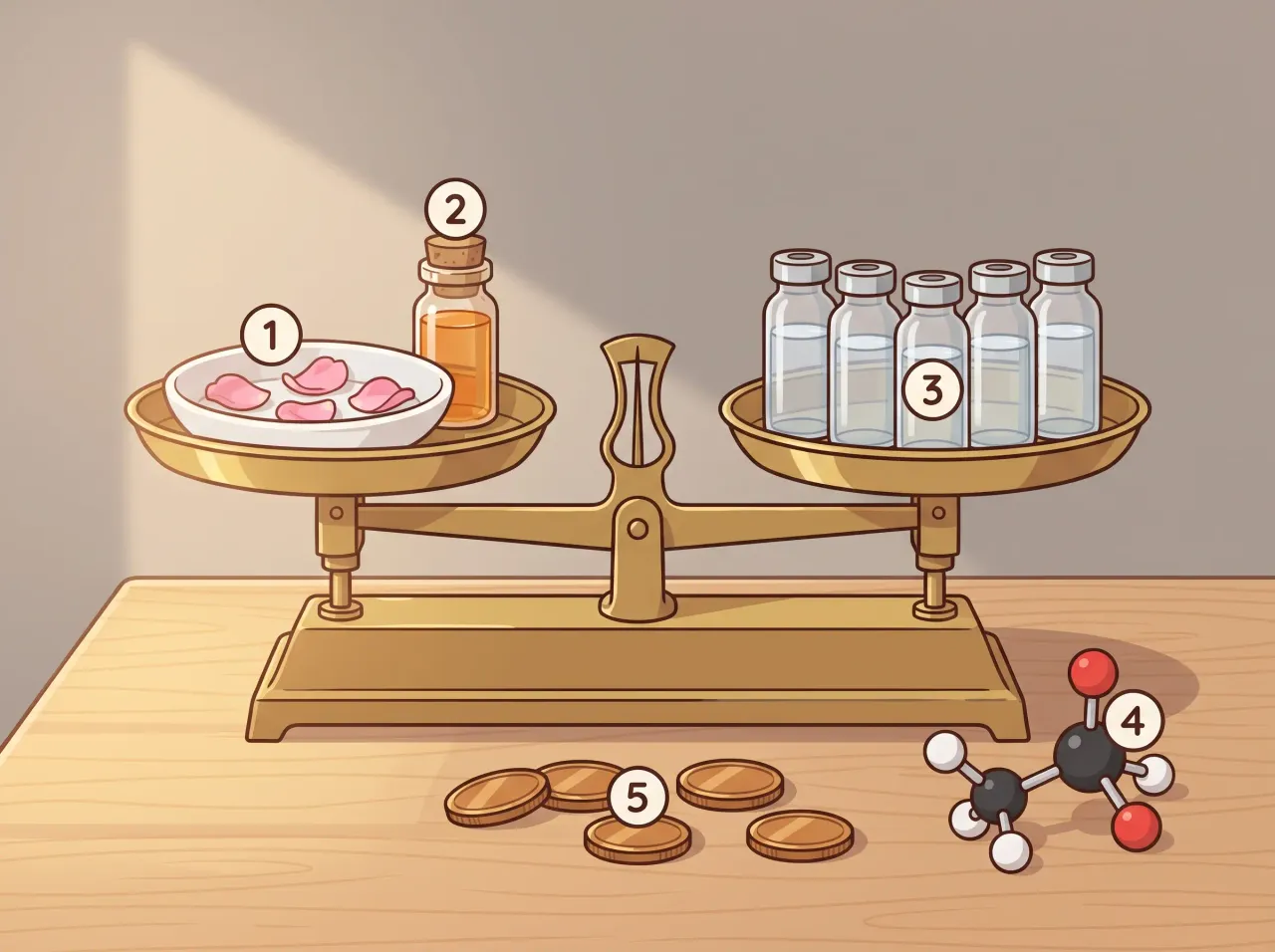
Natural perfume oils come from plants that must be grown, picked and processed, so a small bottle can cost a great deal. Chemists can build the same scent molecules in factories, where identical vials are made cheaply, steadily and without limit.
In the picture
- Rose petals in a dish: the plant material a natural perfume is distilled from
- Small vial of amber oil: the tiny amount of essence a whole harvest yields
- Five identical glass vials: factory-made scent, the same in every bottle
- Molecular model: a scent molecule that can be built in a laboratory
- Row of coins: the price of each option
Examples
- Vanilla flavouring in ice cream is usually a synthetic molecule rather than vanilla pods.
- Rose oil for perfume can cost more per gram than gold, while a lab-made version sells for a fraction of that.
Key takeaways
- Scarce natural ingredients are limited by harvests and land, so their price stays high.
- Synthetic molecules are cheap, stable and can be produced in unlimited identical batches.
Carry on in the app
Three questions on this lesson, to check the idea stuck. Free in the app while the lesson is in the free week.
At least one new illustrated lesson every weekday for your child’s year, with its quiz and a reminder at 6:15 pm.
Get the app
Free app, optional subscription
App Store Google Play