Mon Prof Augmenté
Steam, Coal and the Factory Town
Age 16 · History
Open to everyone until Tuesday, November 17
To keep it, print it while it is open.
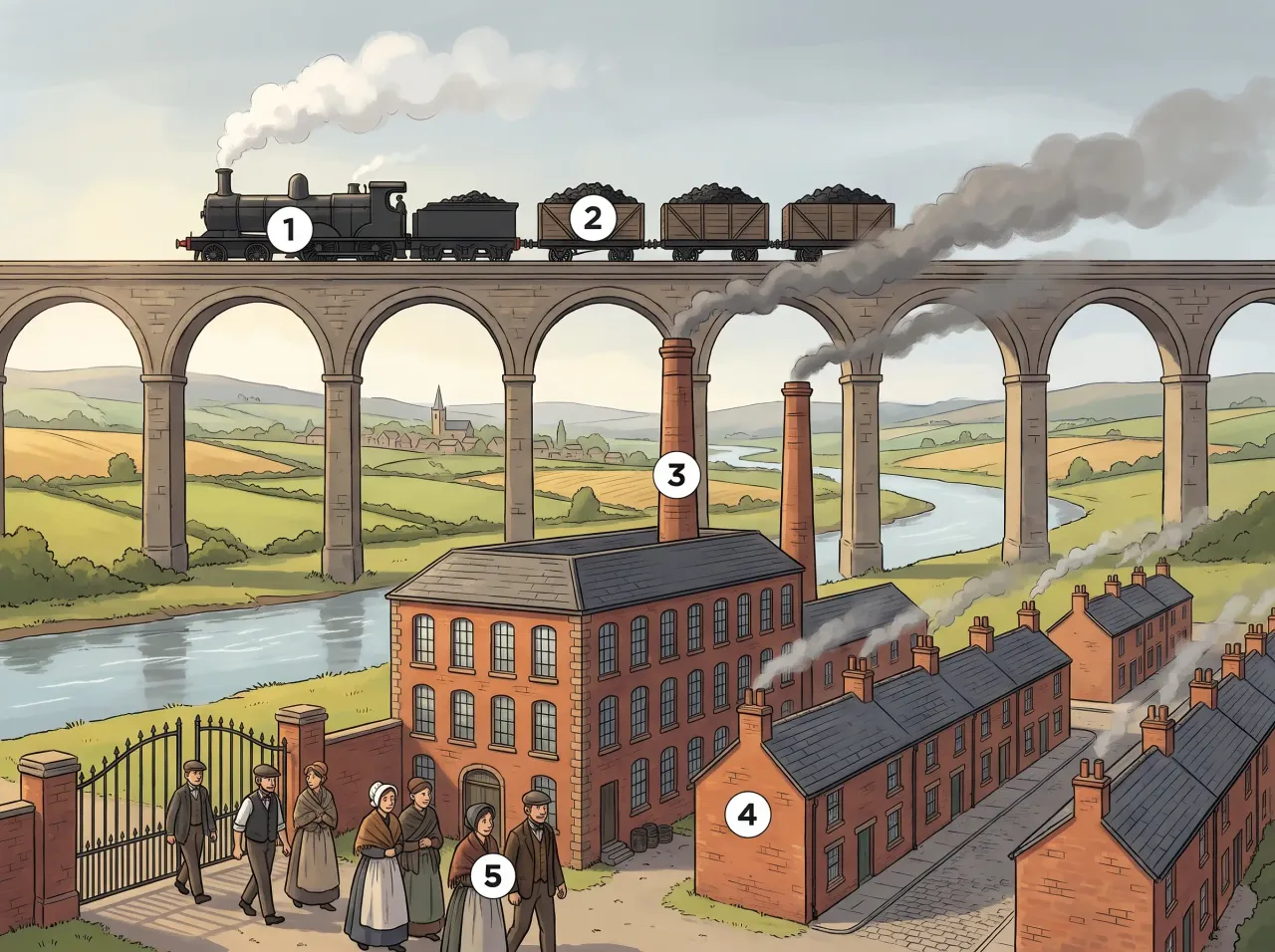
In the mid-1800s, steam engines burning coal powered railways and huge factories, and moved goods and people faster than ever before. Millions left farm work to earn wages in mills, and new industrial towns grew up quickly around them.
In the picture
- Steam locomotive: coal-fired engines turned railways into fast links between cities, ports and mines
- Coal wagons: coal was the fuel of the age, burned to make steam and to smelt iron
- Mechanised textile mill: power-driven machines spun and wove cloth in a single huge building
- Terraced workers' houses: cheap, crowded housing built quickly so workers could live near the mill
- Mill workers: men, women and children paid wages by the hour or the day, working long, fixed shifts
Examples
- Railway timetables made towns use one shared clock time, the same way train schedules organise travel today.
- Many old brick mills now house flats, offices or museums in cities that grew during industrialisation.
Key takeaways
- Coal and iron fed the steam engines that drove railways and factories.
- Factory work pulled people from the countryside into fast-growing, crowded industrial towns.
Quiz: Steam, Coal and the Factory Town (Age 16)
-
Why was coal so important to mid-19th-century industry?
-
What drew millions of people away from farm work and into the industrial towns?
-
Why were terraced workers' houses built cheaply and packed closely together?
The answers, each with its explanation, are in the app. This quiz is free there while the lesson is in the free week.
Get the app
Free app, optional subscription
App Store Google Play
Carry on in the app
At least one new illustrated lesson every weekday for your child’s year, with its quiz and a reminder at 6:15 pm.
Your child’s teacher does not use My Enhanced Teacher yet?
Tell them about it