Mon Prof Augmenté
A balanced plate
Age 16 · Daily Life
Open to everyone until Monday, November 16
To keep it, print it while it is open.
A balanced diet means eating a variety of foods in the right proportions: lots of fruit and vegetables, enough grain foods and protein foods, and only a little sugar, fat and salt. Over time, these choices help prevent diseases such as obesity, type 2 diabetes and heart disease.
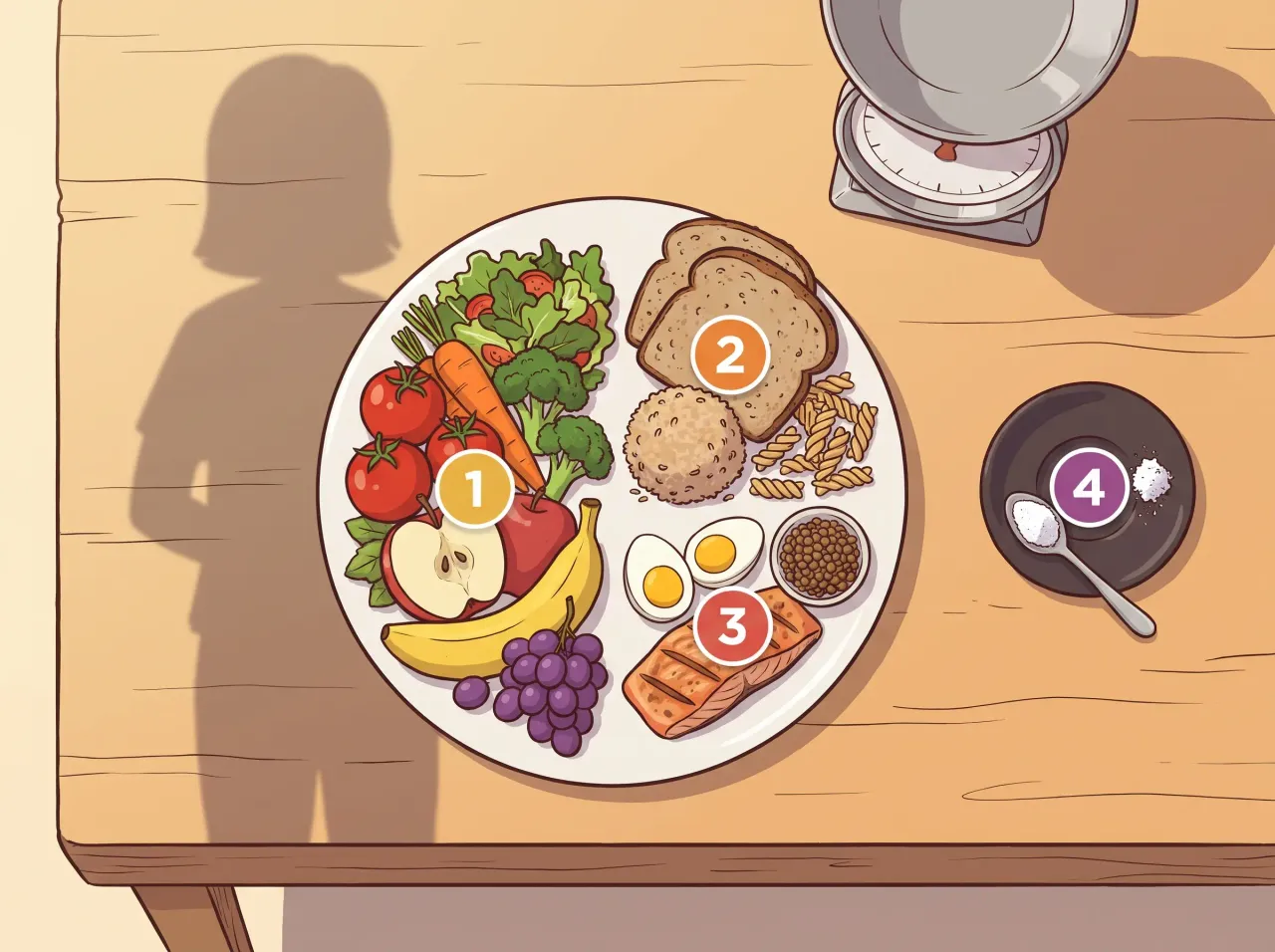
In the picture
- Fruit and vegetables: the biggest part of the plate, full of fibre, vitamins and minerals
- Grain foods: bread, rice and pasta, which give lasting energy, best eaten wholegrain
- Protein foods: fish, eggs and pulses, which build and repair the body
- Sugar and salt: small amounts only, because too much harms the heart and blood vessels
Examples
- Swapping a can of soda for a glass of water and a piece of fruit at snack time
- Filling half of a lunch plate with salad and vegetables before adding pasta and chicken
Key takeaways
- The WHO recommends at least 400 g of fruit and vegetables a day, about five portions
- Adults should eat less than 5 g of salt a day, about one teaspoon
Quiz: A balanced plate (Age 16)
-
How much fruit and vegetables does the WHO recommend eating each day?
-
What is the maximum amount of salt an adult should eat per day?
-
Which food group should make up the largest share of a balanced diet?
The answers, each with its explanation, are in the app. This quiz is free there while the lesson is in the free week.
Get the app
Free app, optional subscription
App Store Google Play
Carry on in the app
At least one new illustrated lesson every weekday for your child’s year, with its quiz and a reminder at 6:15 pm.
Your child’s teacher does not use My Enhanced Teacher yet?
Tell them about it