Mon Prof Augmenté
Small crop, big profit, still supported
Age 16 · Economics
Open to everyone until Sunday, November 15
To keep it, print it while it is open.
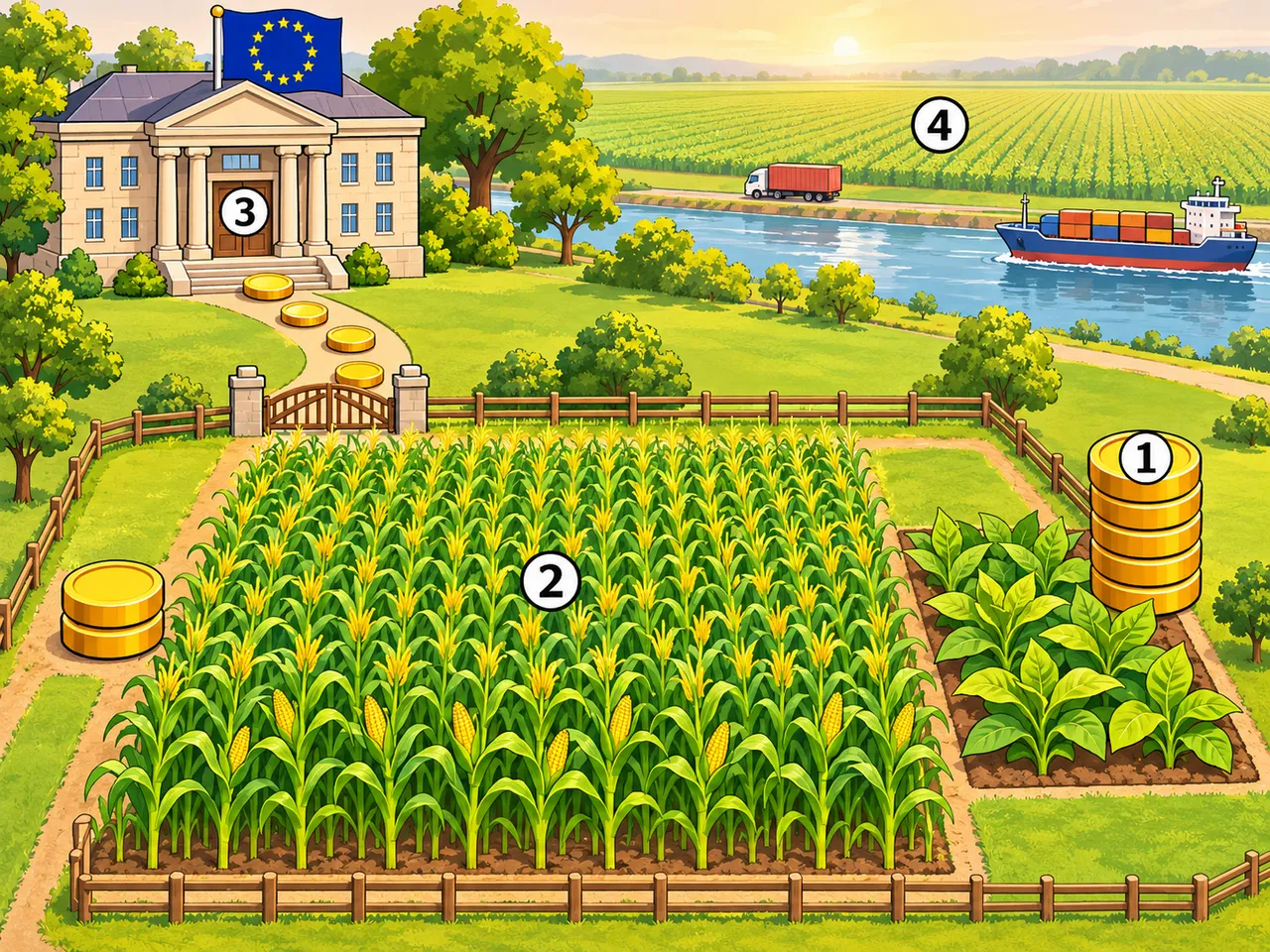
A crop can earn a lot per hectare, so even a small plot makes a farm rich. But if farms abroad grow it far more cheaply, the farm may need public money to keep selling at a competitive price.
In the picture
- Small high-value plot: a lot of income from little land
- Large low-value plot: much land for a modest income
- Public subsidy: government money paid to farmers
- Distant cheaper producer: lower costs that push prices down
Examples
- A small vineyard earns more per hectare than a wheat field, yet may receive aid to match imported wine prices.
- Sugar beet farms in some regions earn well but rely on payments against cheaper cane sugar from abroad.
Key takeaways
- Profit per hectare and the ability to compete on price are different things.
- Subsidies can keep farms alive against cheaper foreign producers but cost taxpayers money.
Quiz: Small crop, big profit, still supported (Age 16)
-
A small farm grows a crop that earns a very high income per hectare. Why might it still need public subsidies?
-
What is the main reason a farm might need a subsidy to keep selling its crop at a competitive price?
-
What is the downside of using subsidies to keep farms alive against cheaper foreign producers?
The answers, each with its explanation, are in the app. This quiz is free there while the lesson is in the free week.
Get the app
Free app, optional subscription
App Store Google Play
Carry on in the app
At least one new illustrated lesson every weekday for your child’s year, with its quiz and a reminder at 6:15 pm.
Your child’s teacher does not use My Enhanced Teacher yet?
Tell them about it