Mon Prof Augmenté
Precious Stones and Price
Open to everyone until Tuesday, September 29
To keep it, print it while it is open.
Precious stones cost a lot because good ones are rare, hard to extract, and often require careful cutting. A stone’s cut changes how it looks and how much buyers will pay.
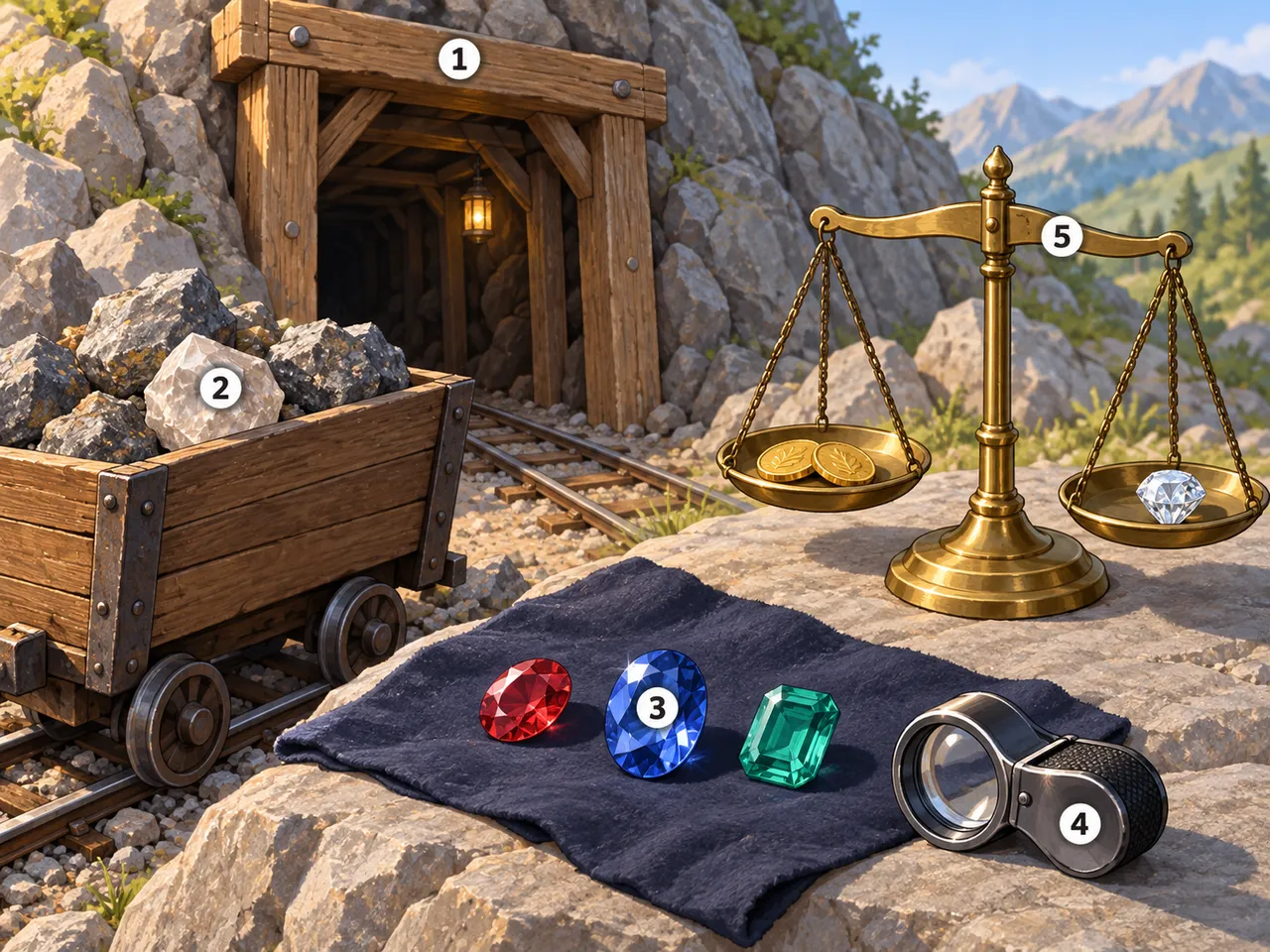
In the picture
- Rock face at the mine entrance: where gem material is taken from the ground.
- Rough crystals in the cart: unprocessed stones before cutting.
- Faceted gem on cloth: a stone after cutting and polishing.
- Jeweller’s loupe: a tool for inspecting a stone’s cut and clarity.
- Balance scale: coins on one pan and a gem on the other, comparing money and stone.
Examples
- A diamond ring costs more than a similar-sized glass ring.
- A badly cut emerald sells for less than a well-cut one of the same weight.
Key takeaways
- Rarity and extraction costs push gem prices up.
- Cut quality is a major part of a gem’s market value.
Carry on in the app
Three questions on this lesson, to check the idea stuck. Free in the app while the lesson is in the free week.
At least one new illustrated lesson every weekday for your child’s year, with its quiz and a reminder at 6:15 pm.
Get the app
Free app, optional subscription
App Store Google Play