Mon Prof Augmenté
Cold Bag to Fridge
Age 18 · Daily Life
Open to everyone until Tuesday, October 27
To keep it, print it while it is open.
Chilled and frozen food should stay cold while you move it from the shop to your kitchen. Putting it into the fridge or freezer quickly slows the growth of microbes.
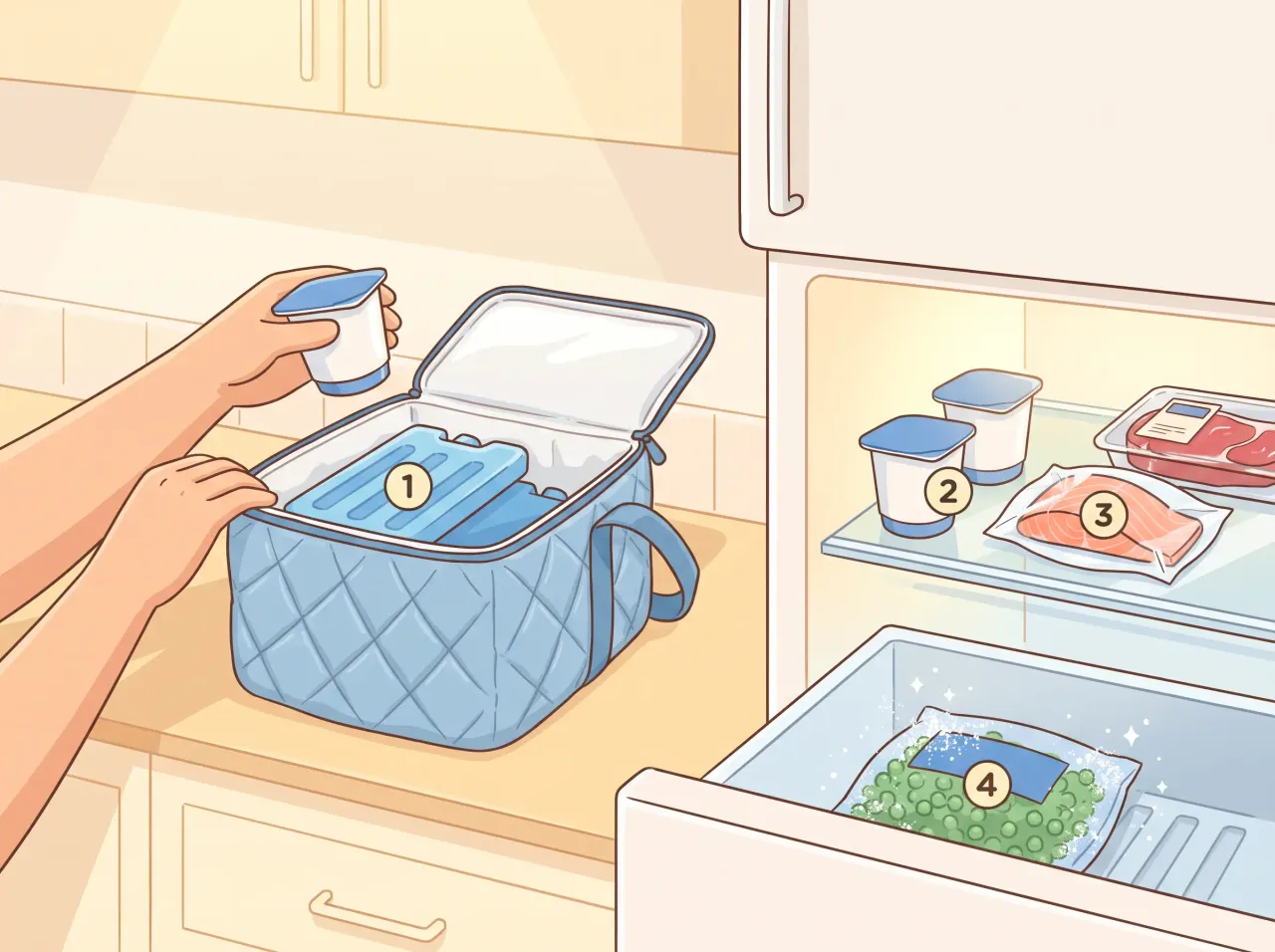
In the picture
- An insulated cool bag with blue ice packs: cold air held around the food during transport.
- A yogurt cup on a refrigerator shelf: chilled food stored at fridge temperature.
- A wrapped fish fillet in the refrigerator: fresh food kept cold before cooking.
- A bag of frozen peas in the freezer drawer: frozen food kept solid and frosty.
Examples
- Carrying milk home in an insulated bag with an ice pack.
- Putting leftovers in the fridge within two hours of cooking.
Key takeaways
- Cold temperatures slow the growth of microbes in food.
- Keep chilled food below 5°C and frozen food below -18°C.
Quiz: Cold Bag to Fridge (Age 18)
-
What does keeping chilled and frozen food cold do to microbes?
-
What are the recommended storage temperatures for chilled and frozen food?
-
During transport from the shop to home, what should an insulated cool bag with ice packs do?
The answers, each with its explanation, are in the app. This quiz is free there while the lesson is in the free week.
Get the app
Free app, optional subscription
App Store Google Play
Carry on in the app
At least one new illustrated lesson every weekday for your child’s year, with its quiz and a reminder at 6:15 pm.
Your child’s teacher does not use My Enhanced Teacher yet?
Tell them about it