Mon Prof Augmenté
Inverse Graphs
Age 18 · Maths

The natural logarithm undoes the exponential function. Their graphs are reflections of each other across the line y = x.
This picture is part of the full library
Every lesson is open to everyone for 7 days after it is published. This one came out on October 14, 2026: its text stays readable here, and its picture opens with a subscription.
The app is free. A subscription opens every lesson, in every school year.

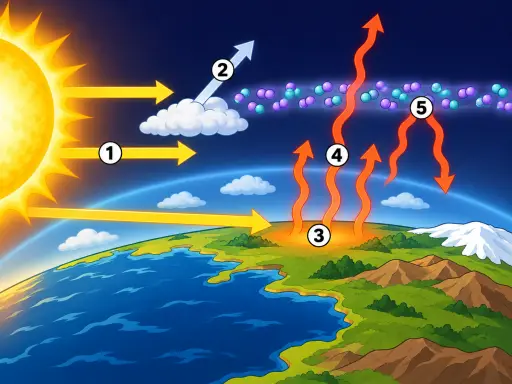
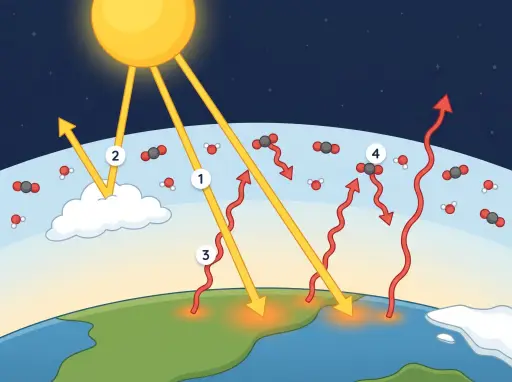
In the picture
- Steep rising curve: rises from lower left and continues upward to the right
- Slow rising curve: hugs the vertical axis below the origin and rises slowly to the right
- Dashed diagonal line: passes through the origin at forty-five degrees
- Point on the vertical axis: one unit above the origin
- Point on the horizontal axis: one unit right of the origin
Examples
- Compound interest grows exponentially, and a natural logarithm can estimate how long it takes for an investment to reach a target.
- A cooling drink loses its temperature difference exponentially, and a natural logarithm can estimate the elapsed cooling time.
Key takeaways
- The natural logarithm and the exponential function undo each other.
- Their graphs are mirror images across the line y = x.
Quiz: Inverse Graphs (Age 18)
-
What is the relationship between the natural logarithm and the exponential function?
-
Across which line are the graphs of the natural logarithm and the exponential function mirror images?
-
What does the natural logarithm undo?
The answers, each with its explanation, are in the app. This lesson has left the free week, so its quiz is part of the subscription.
Get the app
Free app, optional subscription
App Store Google Play
Carry on in the app
At least one new illustrated lesson every weekday for your child’s year, with its quiz and a reminder at 6:15 pm.
Your child’s teacher does not use My Enhanced Teacher yet?
Tell them about it