Mon Prof Augmenté
Calming the Alarm
Open to everyone until Thursday, October 1
To keep it, print it while it is open.
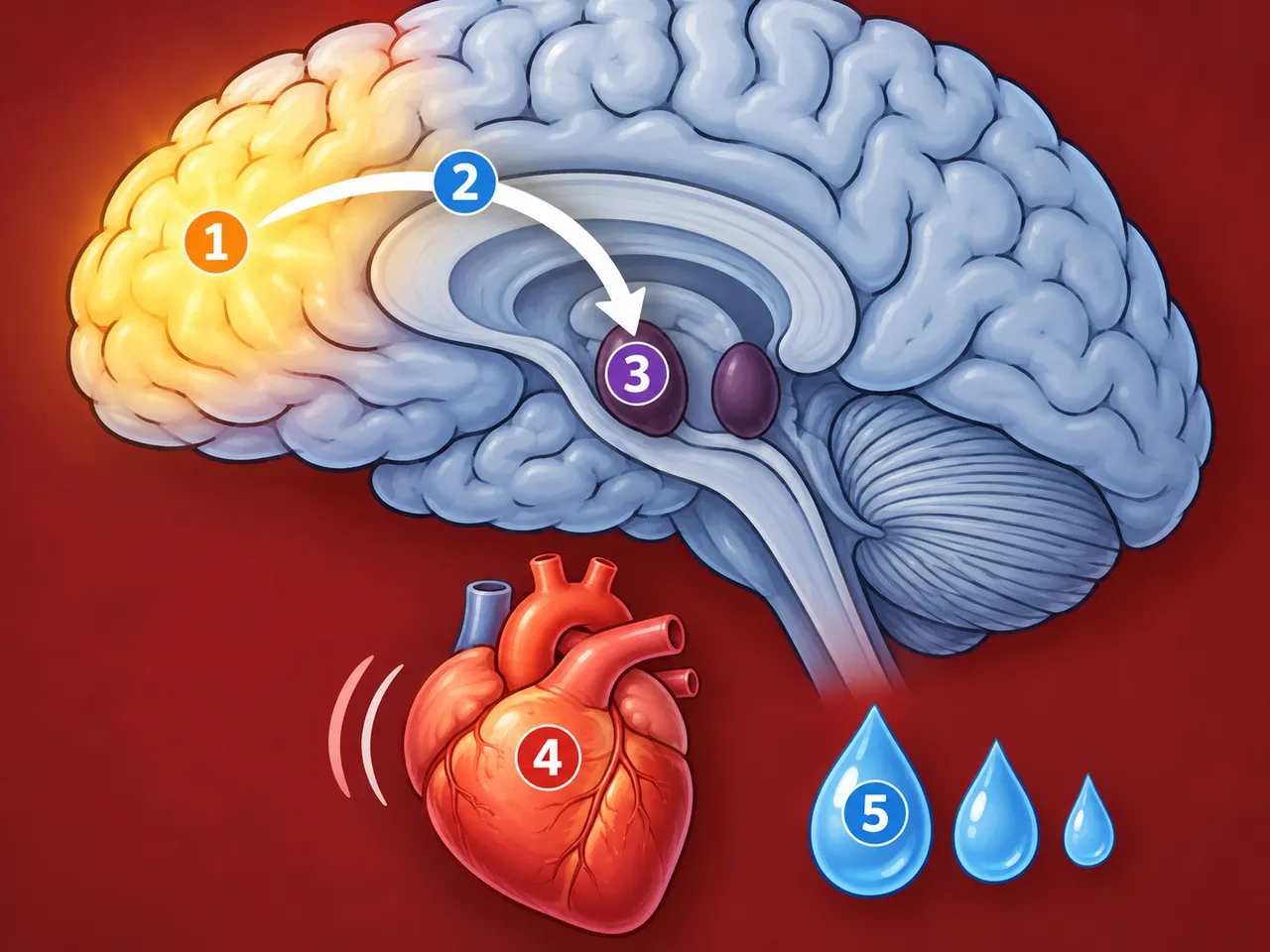
When a threat signal reaches the brain, the front part can re-check what is happening. If it finds no real danger, it can quiet the alarm centre and the body’s stress response eases.
In the picture
- The front brain region: it reassesses the threat signal.
- The arrow: the front region sends a quieting message to the alarm centre.
- The pair of almond-shaped clusters: they receive the quieting message.
- The heart: its fast beating eases.
- The sweat droplets: they become smaller and fewer.
Examples
- Feeling your heart pound before a test, then noticing the questions are familiar and settling down.
- Hearing a sudden noise at night, checking that it is only the wind, and relaxing again.
Key takeaways
- The prefrontal cortex can re-evaluate a threat and reduce amygdala activity.
- Calming the amygdala lowers physical stress signs such as fast heartbeat and sweating.
Carry on in the app
Three questions on this lesson, to check the idea stuck. Free in the app while the lesson is in the free week.
At least one new illustrated lesson every weekday for your child’s year, with its quiz and a reminder at 6:15 pm.
Get the app
Free app, optional subscription
App Store Google Play