Mon Prof Augmenté
One volcano, two villages
Age 15 · Geography
Open to everyone until Wednesday, November 18
To keep it, print it while it is open.
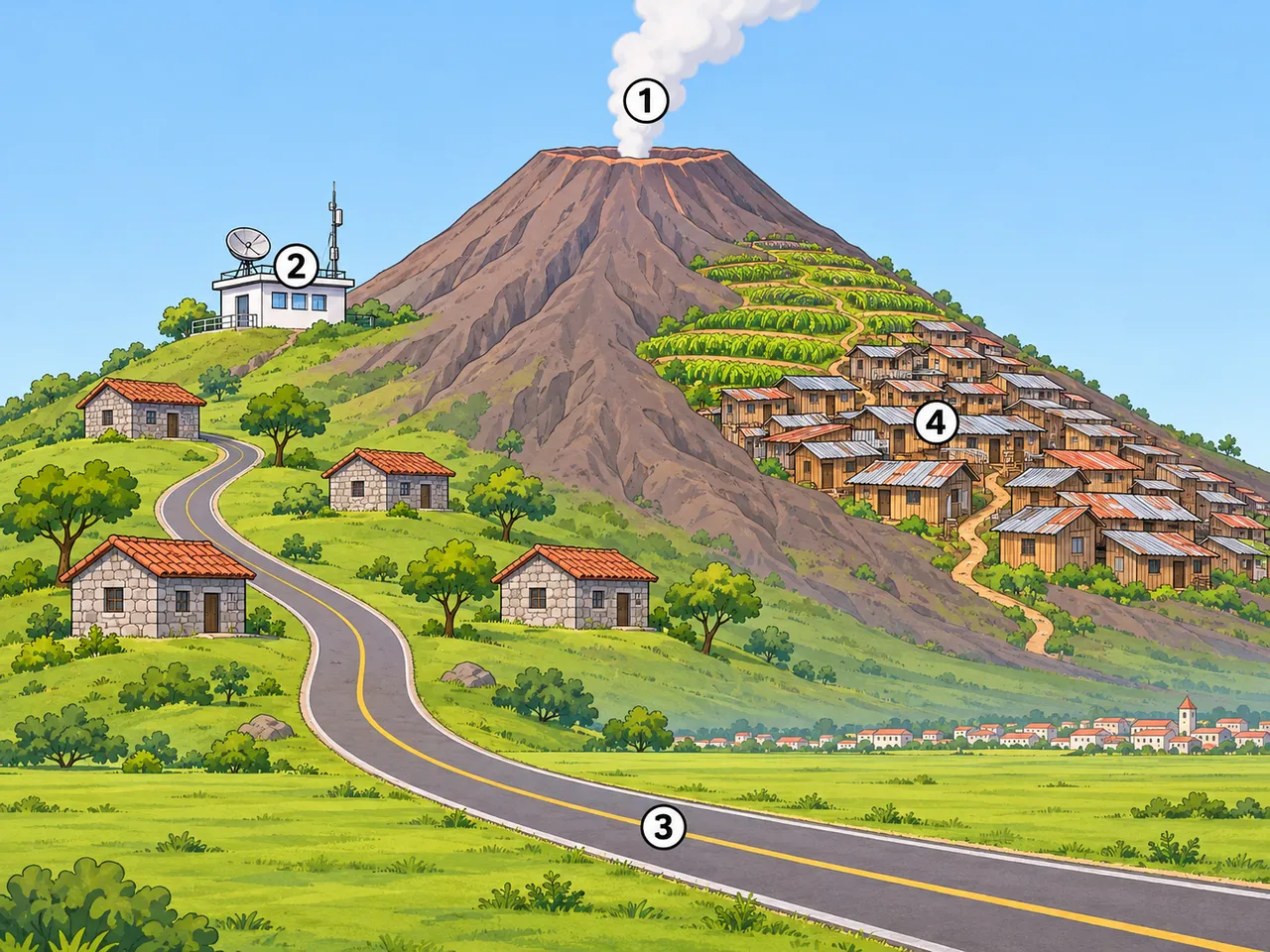
Both villages face the same volcano, but they would not suffer the same damage if it erupted. How much harm a hazard causes depends on how many people live close by, how solid their homes are, and how well prepared they are.
In the picture
- The hazard: the same volcano threatens both slopes
- Monitoring station: scientists can warn people before an eruption
- Wide road: people can evacuate quickly to the plain
- Dense shacks: many people in fragile homes close to the crater
Examples
- An earthquake of the same strength can kill far more people in a city with poorly built buildings than in one with earthquake-proof buildings.
- A town with flood warnings and a practised evacuation plan loses fewer lives in a storm than a town without them.
Key takeaways
- Risk = hazard × vulnerability: the same hazard can cause very different damage.
- Density, wealth, building quality and preparedness all change how vulnerable people are.
Quiz: One volcano, two villages (Age 15)
-
Two towns face exactly the same volcano. Why might one suffer far more damage than the other if it erupts?
-
How does a wide road leading away from a volcano reduce the harm of an eruption?
-
Three villages sit at the same distance from the same volcano. Which one is most at risk?
The answers, each with its explanation, are in the app. This quiz is free there while the lesson is in the free week.
Get the app
Free app, optional subscription
App Store Google Play
Carry on in the app
At least one new illustrated lesson every weekday for your child’s year, with its quiz and a reminder at 6:15 pm.
Your child’s teacher does not use My Enhanced Teacher yet?
Tell them about it