Mon Prof Augmenté
Adding two vectors by drawing
Age 15 · Maths
Open to everyone until Friday, October 30
To keep it, print it while it is open.
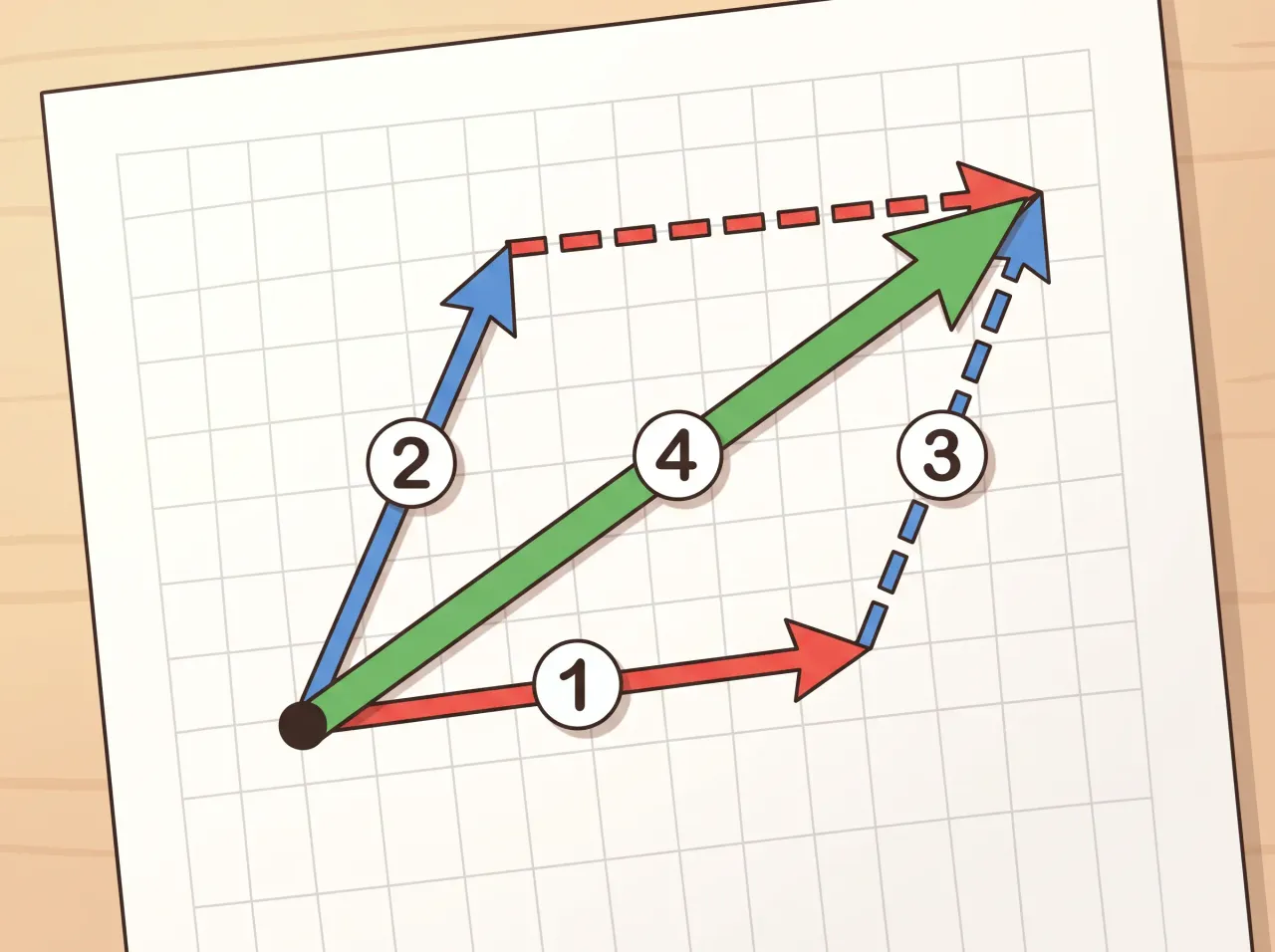
To add two vectors, draw the second one starting at the tip of the first, then draw an arrow from the very start to the final tip. You get the same result if you draw both from one point, complete a parallelogram, and follow its diagonal.
In the picture
- First vector: the red arrow, with its own length and direction
- Second vector: the blue arrow, starting from the same point
- Copy of the second vector placed tip to tail on the head of the first
- Resultant vector: the diagonal from the shared start to the opposite corner
Examples
- A swimmer heads straight across a river while the current pushes them sideways, so they actually move along a slanted path.
- Two people pull a sled with ropes at different angles, and the sled slides in the direction of the combined pull.
Key takeaways
- Tip to tail and the parallelogram rule always give the same resultant vector.
- The order doesn’t matter: the first vector plus the second equals the second plus the first.
Quiz: Adding two vectors by drawing (Age 15)
-
When you add two vectors tip to tail, where do you draw the second vector?
-
With the parallelogram rule, which line is the resultant vector?
-
Does adding the first vector to the second give the same result as adding the second to the first?
The answers, each with its explanation, are in the app. This quiz is free there while the lesson is in the free week.
Get the app
Free app, optional subscription
App Store Google Play
Carry on in the app
At least one new illustrated lesson every weekday for your child’s year, with its quiz and a reminder at 6:15 pm.
Your child’s teacher does not use My Enhanced Teacher yet?
Tell them about it