Mon Prof Augmenté
How Colliding Plates Build Mountains

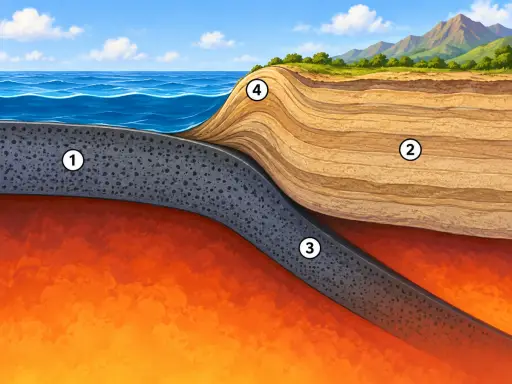
Earth’s outer shell is cracked into huge slabs of rock called plates, and they creep along in different directions. Where two plates push into each other, the rock caught between them is squeezed, folded and driven upward into a mountain range.
This picture is part of the full library
Every lesson is open to everyone for 7 days after it is published. This one came out on September 10, 2026: its text stays readable here, and its picture opens with a subscription.
The app is free. A subscription opens every lesson, in every school year.
Age 12: open this week
Browse Age 12


In the picture
- The left plate — a thick slab of layered rock creeping to the right.
- The right plate — the opposing slab pushing back to the left.
- The collision zone — buckled, folded rock layers where the two slabs meet.
- The summit — the highest peak, built from rock stacked up by the folding.
Examples
- Pushing a rug across a floor: the cloth bunches into ridges, just like squeezed rock layers.
- The Himalayas, where India is still pushing into Asia and Everest grows a few millimetres taller each year.
Key takeaways
- Mountain ranges form where two plates collide and rock is squeezed upward.
- Plates move only a few centimetres a year, so a range takes millions of years to rise.
Carry on in the app
Three questions on this lesson. It has left the free week, so its quiz is for subscribers.
At least one new illustrated lesson every weekday for your child’s year, with its quiz and a reminder at 6:15 pm.
Free app, optional subscription
App Store Google Play