Mon Prof Augmenté
How Waves Carve a Headland
Age 12 · Geography
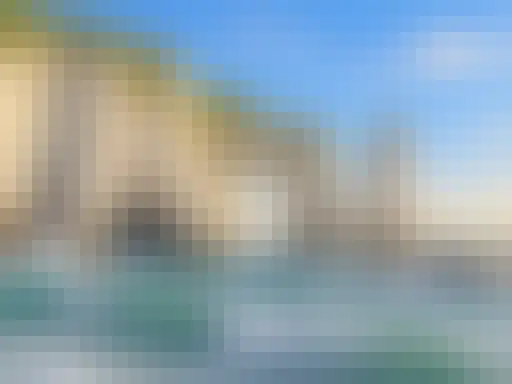
Waves crash into weak spots in a cliff and slowly wear them away over thousands of years. A small crack grows into a cave, then an arch, then a stack, and finally a stump.
This picture is part of the full library
Every lesson is open to everyone for 7 days after it is published. This one came out on October 26, 2026: its text stays readable here, and its picture opens with a subscription.
The app is free. A subscription opens every lesson, in every school year.
In the picture
- Crack: waves force water and air into a weak line in the rock and widen it
- Cave: the crack is hollowed out into a hole at the base of the cliff
- Arch: the cave breaks right through the headland, leaving a rock bridge
- Stack: the arch roof falls in, leaving a tall pillar alone in the sea
- Stump: the stack is worn down to a low rock covered at high tide
Examples
- The Old Harry Rocks chalk stacks on the south coast of England
- A sandcastle wall that waves undercut until the top collapses
Key takeaways
- Erosion always starts at weak points such as cracks and joints
- The order is always crack, cave, arch, stack, stump
Quiz: How Waves Carve a Headland (Age 12)
-
Where do waves start to wear away a headland?
-
In which order do the shapes form as waves carve a headland?
-
How does an arch turn into a stack?
The answers, each with its explanation, are in the app. This lesson has left the free week, so its quiz is part of the subscription.
Free app, optional subscription
App Store Google Play
Carry on in the app
At least one new illustrated lesson every weekday for your child’s year, with its quiz and a reminder at 6:15 pm.
Your child’s teacher does not use My Enhanced Teacher yet?
Tell them about it