Mon Prof Augmenté
Where a Valley’s Water Comes From and Goes
Age 12 · Geography
Open to everyone until Wednesday, November 18
To keep it, print it while it is open.
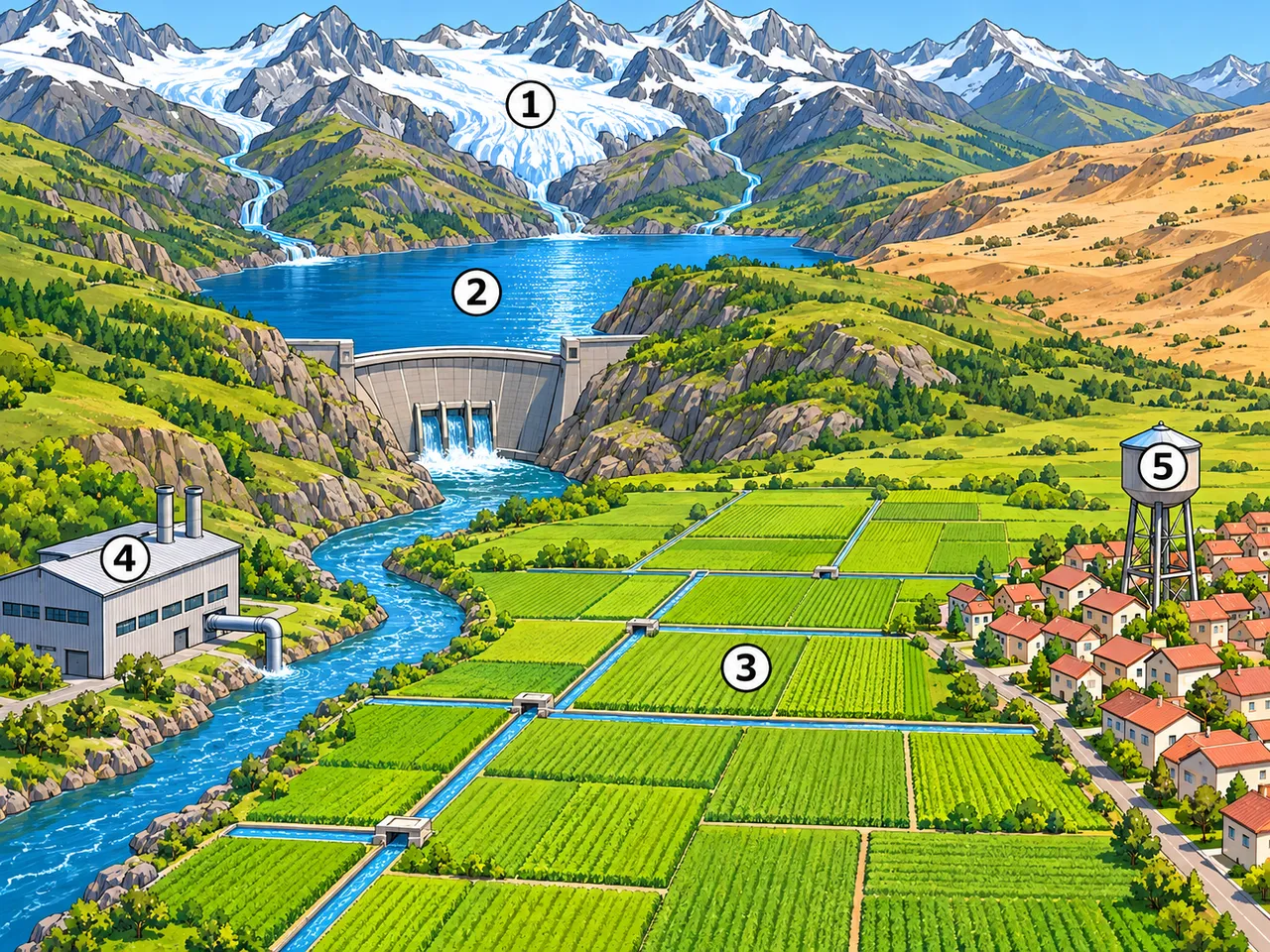
Fresh water is only a small part of all the water on Earth, and it is not shared evenly: some places have plenty while others are dry. Rain and snow refill it, but it is stored in glaciers, rivers and reservoirs and then shared between farms, factories and homes.
In the picture
- Glacier: frozen fresh water that melts slowly and feeds the river
- Reservoir behind a dam: river water stored for dry months
- Irrigated fields: farming uses the most fresh water
- Factory: industry takes water for cooling and making goods
- Water tower: stores drinking water for the town’s homes
Examples
- The water from your kitchen tap may have started as snow on a mountain far away.
- A farmer opens a canal gate to water a field of maize during a dry summer.
Key takeaways
- Only about 3% of Earth’s water is fresh, and most of it is frozen in ice.
- Farming uses around 70% of the fresh water people take from rivers, lakes and the ground.
Quiz: Where a Valley’s Water Comes From and Goes (Age 12)
-
Where is most of Earth’s fresh water found?
-
Which of these uses the most fresh water that people take from rivers, lakes and the ground?
-
Which statement about fresh water is true?
The answers, each with its explanation, are in the app. This quiz is free there while the lesson is in the free week.
Get the app
Free app, optional subscription
App Store Google Play
Carry on in the app
At least one new illustrated lesson every weekday for your child’s year, with its quiz and a reminder at 6:15 pm.
Your child’s teacher does not use My Enhanced Teacher yet?
Tell them about it