Mon Prof Augmenté
A River’s Journey from Mountain to Sea
Age 12 · Geography
Open to everyone until Thursday, October 29
To keep it, print it while it is open.
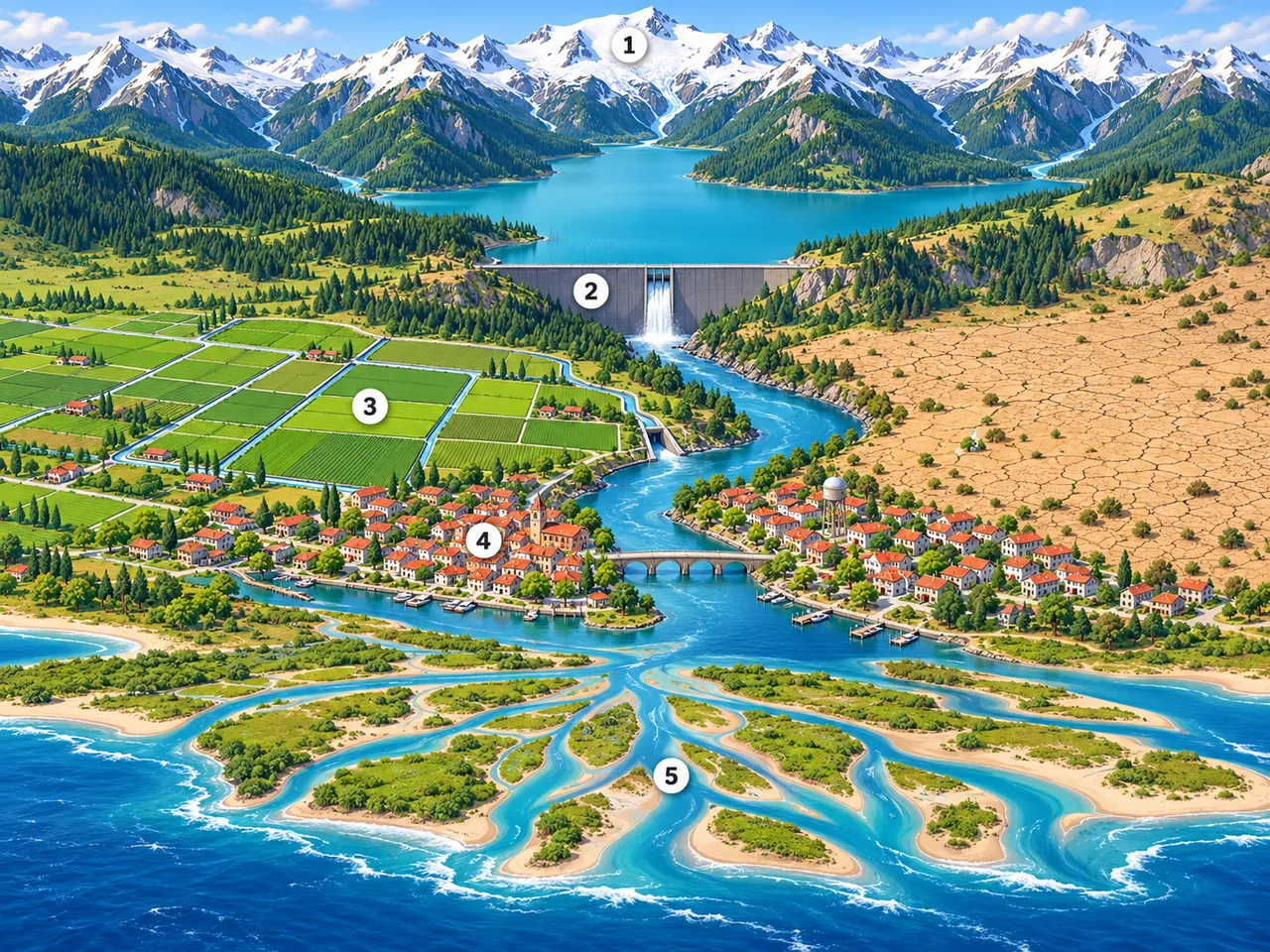
A river collects water from snow and rain in the mountains and carries it all the way to the sea. Along the way, farms, towns and dams all take a share, so less is left for the places further downstream.
In the picture
- Snow and mountain streams: the source where the river’s fresh water begins
- Dam and reservoir: water held back to store it and make electricity
- Irrigated fields: river water turns farmland green while land without it stays dry
- Riverside town: people take water for drinking, washing and industry
- Delta: the river splits into channels and reaches the sea with whatever water is left
Examples
- When a city in a dry summer asks people to limit garden watering, it is protecting a shared water supply.
- Countries along the same river, like the Nile, must agree on how much water each one uses.
Key takeaways
- Only a small part of Earth’s water is fresh water that people can use.
- Water used upstream is no longer available for people and nature downstream.
Quiz: A River’s Journey from Mountain to Sea (Age 12)
-
How much of Earth’s water is fresh water that people can use?
-
A town near the start of a river takes a lot of its water. What happens to the places further downstream?
-
Why do people build a dam and reservoir on a river?
The answers, each with its explanation, are in the app. This quiz is free there while the lesson is in the free week.
Get the app
Free app, optional subscription
App Store Google Play
Carry on in the app
At least one new illustrated lesson every weekday for your child’s year, with its quiz and a reminder at 6:15 pm.
Your child’s teacher does not use My Enhanced Teacher yet?
Tell them about it