Mon Prof Augmenté
Many rolls, steady average
Age 17 · Maths
Open to everyone until Tuesday, November 17
To keep it, print it while it is open.
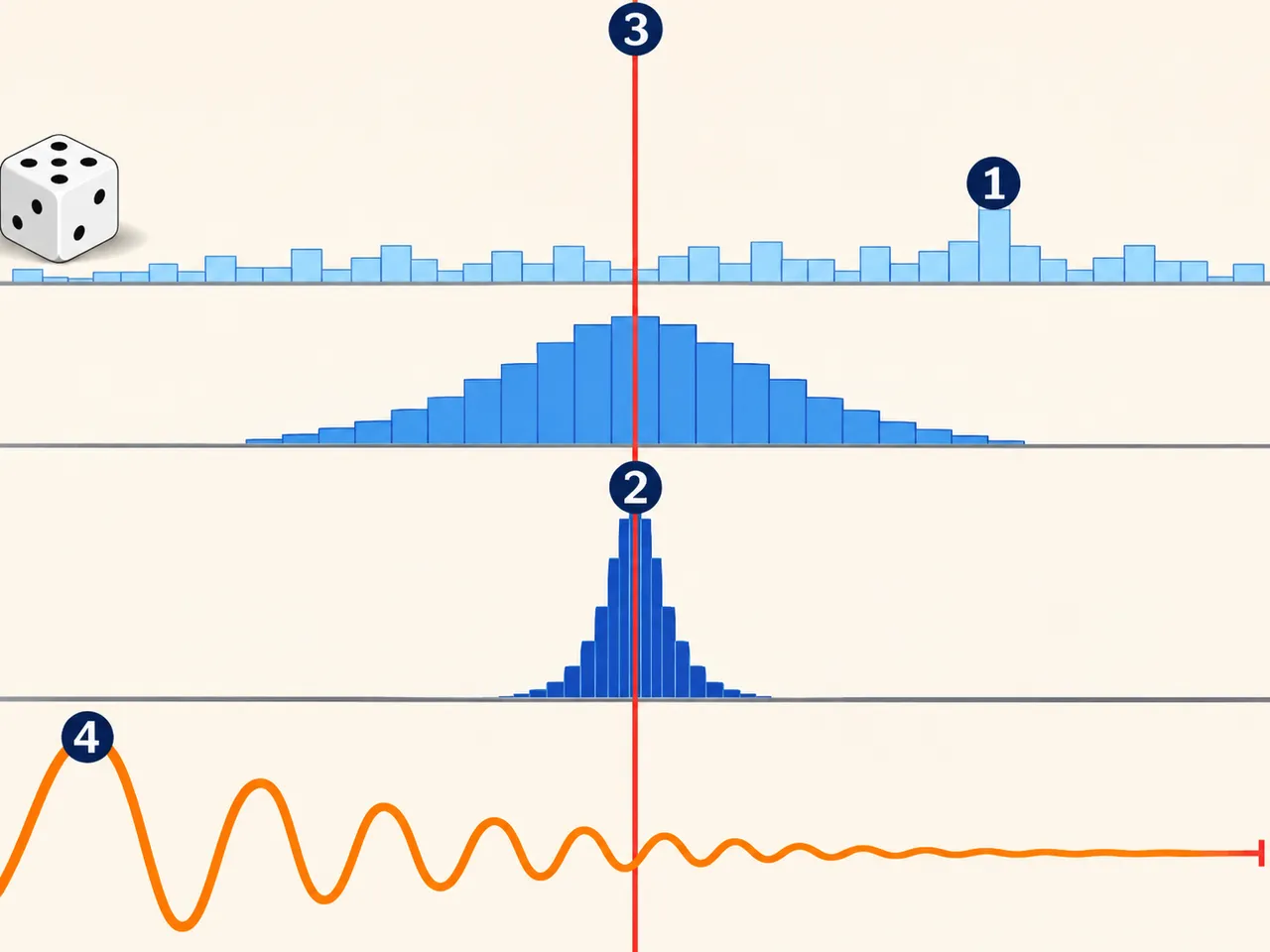
When you average only a few die rolls, the result can land far from 3.5, but averages of thousands of rolls almost always end up very close to it. The more trials you include, the narrower the range of averages you are likely to see.
In the picture
- Averages of a few rolls: widely scattered results
- Averages of very many rolls: a narrow spike at the centre
- The expected value: 3.5 for a fair die
- Running average: big swings at first, then settling on the expected value
Examples
- A casino can’t predict a single spin of roulette, but over millions of bets its average profit per bet is almost exactly what the odds predict.
- An insurer can’t know which driver will crash, but across a million drivers the average claim cost is very predictable.
Key takeaways
- The sample average gets closer to the expected value as the number of trials grows.
- The law says nothing about the next single trial: past results don’t 'balance out' upcoming ones.
Quiz: Many rolls, steady average (Age 17)
-
Imagine many people each roll a fair die and work out their own average. Compared with people who roll it 10 times each, how will the averages of people who roll it 5,000 times each look?
-
A fair die has landed on low numbers several times in a row. What does the law of large numbers say about the next roll?
-
You roll a fair die again and again and update the running average after every roll. What should you expect to see?
The answers, each with its explanation, are in the app. This quiz is free there while the lesson is in the free week.
Get the app
Free app, optional subscription
App Store Google Play
Carry on in the app
At least one new illustrated lesson every weekday for your child’s year, with its quiz and a reminder at 6:15 pm.
Your child’s teacher does not use My Enhanced Teacher yet?
Tell them about it