Mon Prof Augmenté
How an Ensemble Sounds
Age 12 · Music

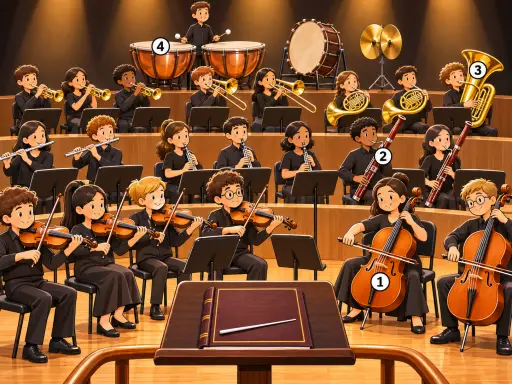
An ensemble mixes different instruments at the same time. The way each part is high or low, loud or soft, fast or slow, and bright or warm changes the whole sound.
This picture is part of the full library
Every lesson is open to everyone for 7 days after it is published. This one came out on October 1, 2026: its text stays readable here, and its picture opens with a subscription.
The app is free. A subscription opens every lesson, in every school year.

In the picture
- Upright bass: low notes and a deep, dark tone color
- Low drum: hard and soft strikes that change loudness
- Cello bow: fast or slow strokes that set tempo
- Flute: high notes and a bright, clear tone color
- Triangle: small bright strokes that add a separate layer
Examples
- A school band playing a song: the bass drum keeps the loud beats, the flute floats above, and the cello fills the middle.
- A phone playing a track: turning up the volume, speeding up the song, or adding another instrument changes the whole feel.
Key takeaways
- Changing one dimension, such as loudness or tempo, changes how the whole ensemble sounds.
- Different pitch ranges, tone colors, and layers fit together to make one combined sound.
Quiz: How an Ensemble Sounds (Age 12)
-
If a drummer hits harder and then softer, which musical dimension changes?
-
If a cellist changes from slow strokes to fast strokes, which musical dimension is being changed?
-
How do different pitch ranges, tone colors, and layers work together in an ensemble?
The answers, each with its explanation, are in the app. This lesson has left the free week, so its quiz is part of the subscription.
Free app, optional subscription
App Store Google Play
Carry on in the app
At least one new illustrated lesson every weekday for your child’s year, with its quiz and a reminder at 6:15 pm.
Your child’s teacher does not use My Enhanced Teacher yet?
Tell them about it