Mon Prof Augmenté
The Four Families of the Orchestra
Age 12 · Music
Open to everyone until Tuesday, November 17
To keep it, print it while it is open.
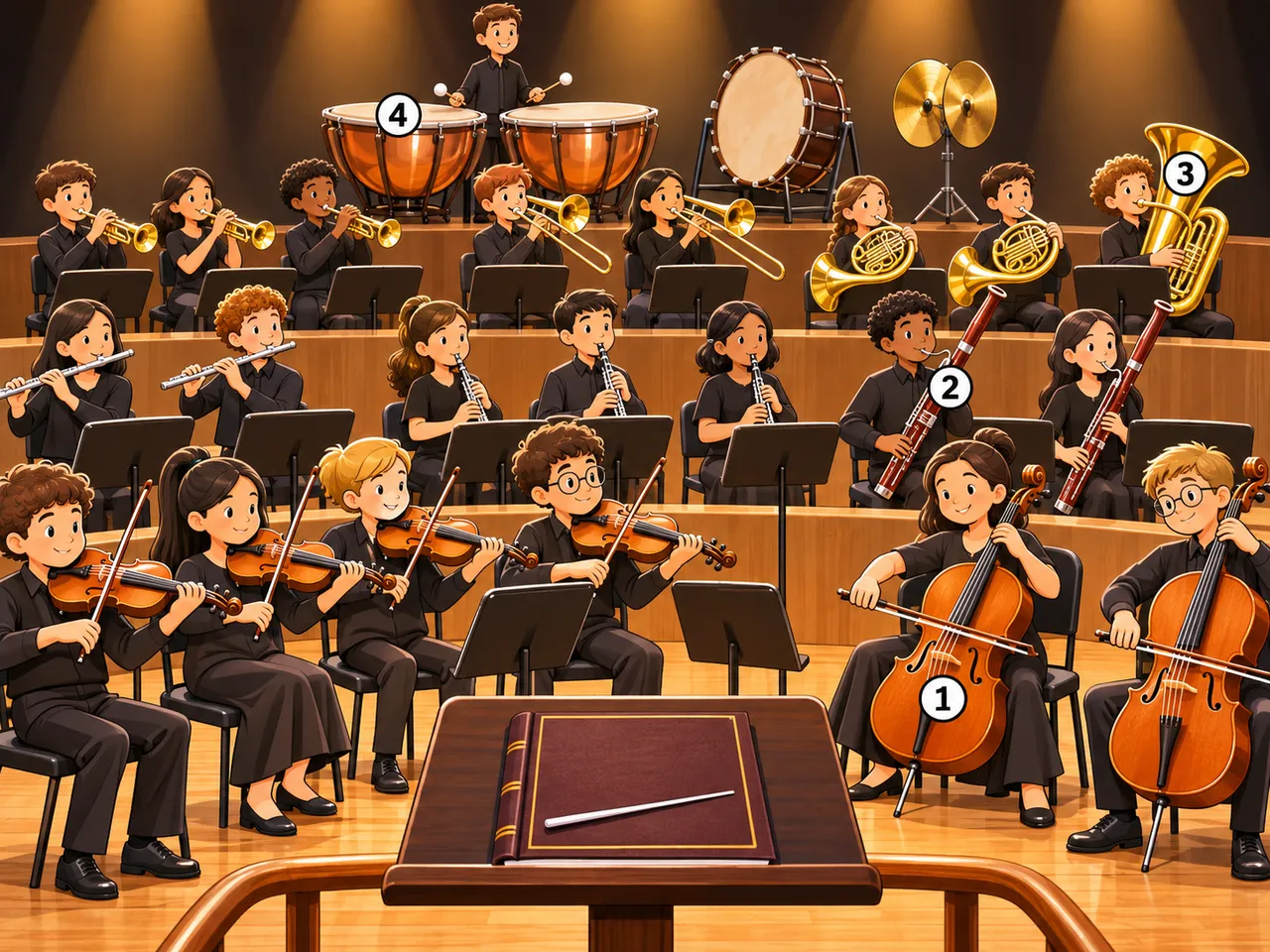
Each instrument family has its own kind of sound, called timbre, because it makes sound in a different way: strings vibrate, air is blown, lips buzz or something is struck. The orchestra puts the softer strings at the front and the loudest brass and percussion at the back, so every family can be heard.
In the picture
- Strings: a bow or fingers make strings vibrate, giving a warm, singing sound; the biggest family sits at the front
- Woodwinds: air blown across a hole or through a reed gives a breathy or reedy sound; they sit behind the strings
- Brass: the player’s buzzing lips in a metal mouthpiece give a bright, powerful sound; they sit behind the woodwinds
- Percussion: drums and cymbals are struck or shaken for rhythm and big accents; they sit at the very back
Examples
- In a film soundtrack, a loud trumpet fanfare often marks a hero’s entrance, while soft violins accompany a sad scene.
- The recorder many students play at school is a woodwind instrument, just like the flute in the orchestra.
Key takeaways
- Timbre is the 'colour' of a sound that lets you tell two instruments apart even when they play the same note.
- From front to back the orchestra goes strings, woodwinds, brass, percussion: from softest to loudest.
Quiz: The Four Families of the Orchestra (Age 12)
-
A violin and a trumpet play exactly the same note, but you can still tell which is which. What lets you do that?
-
How does a brass player make a sound?
-
Going from the front of the orchestra to the back, which order is correct?
The answers, each with its explanation, are in the app. This quiz is free there while the lesson is in the free week.
Get the app
Free app, optional subscription
App Store Google Play
Carry on in the app
At least one new illustrated lesson every weekday for your child’s year, with its quiz and a reminder at 6:15 pm.
Your child’s teacher does not use My Enhanced Teacher yet?
Tell them about it