Mon Prof Augmenté
How a Container Port Links the World
Age 17 · Geography

Most goods traded between continents cross the oceans on giant ships carrying standard-sized steel containers. Ports are hubs where those boxes are switched from ship to train or truck, linking sea routes to the land networks that reach factories and shops.
This picture is part of the full library
Every lesson is open to everyone for 7 days after it is published. This one came out on November 2, 2026: its text stays readable here, and its picture opens with a subscription.
The app is free. A subscription opens every lesson, in every school year.
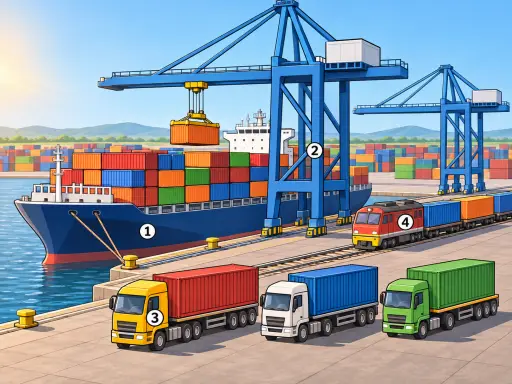
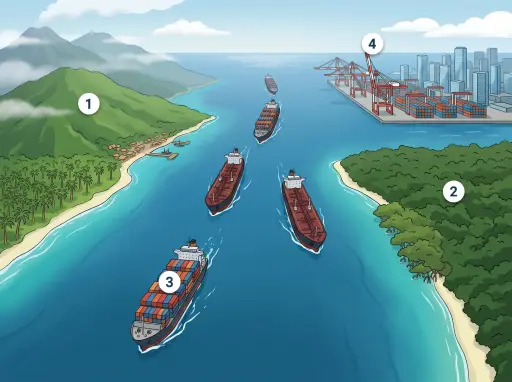
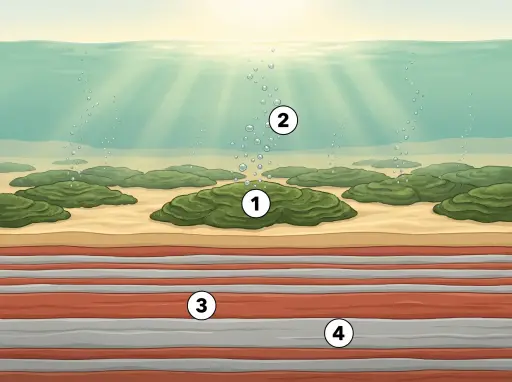
In the picture
- Container ship: carries thousands of standard boxes across the oceans
- Gantry crane: moves containers between the ship and the quay in minutes
- Freight train: carries many containers inland at once to distant cities
- Truck: makes the last road journey to a warehouse or shop
Examples
- A smartphone assembled in East Asia reaches a European shop by ship, then train, then truck.
- Bananas from Latin America travel in refrigerated containers to ports across the Atlantic.
Key takeaways
- Around 80% of world trade by volume travels by sea.
- Standard containers fit ships, trains and trucks, which makes transfers fast and cheap.
Quiz: How a Container Port Links the World (Age 17)
-
Roughly what share of world trade, by volume, travels by sea?
-
Why does using standard-sized containers make moving goods fast and cheap?
-
What is the main role of a container port in global trade?
The answers, each with its explanation, are in the app. This lesson has left the free week, so its quiz is part of the subscription.
Free app, optional subscription
App Store Google Play
Carry on in the app
At least one new illustrated lesson every weekday for your child’s year, with its quiz and a reminder at 6:15 pm.
Your child’s teacher does not use My Enhanced Teacher yet?
Tell them about it