Mon Prof Augmenté
Steam Factories and Railways
Age 16 · History

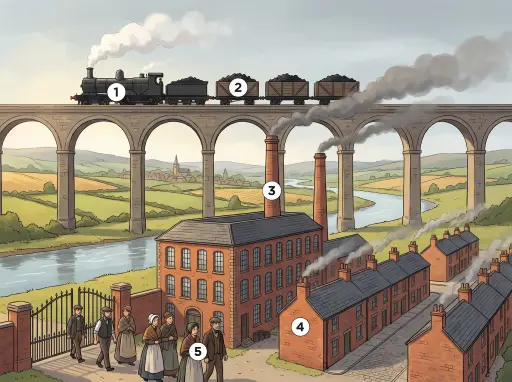
Steam engines powered factories and trains, so goods could be made and moved faster. As work moved into towns, many families left farms for rows of houses near the mills.
This picture is part of the full library
Every lesson is open to everyone for 7 days after it is published. This one came out on October 4, 2026: its text stays readable here, and its picture opens with a subscription.
The app is free. A subscription opens every lesson, in every school year.
Age 16: open this week
Browse Age 16

In the picture
- Factory chimney: brick chimney releasing smoke above a mill
- Steam locomotive: engine pulling freight wagons
- Stone viaduct: arched bridge carrying the railway over the valley
- Terraced house: narrow brick home in a row along the street
- Farmhouse: rural stone house beside fields and a barn
Examples
- A steam train hauling coal wagons past a mill
- A family carrying bags from a farm to a town street
Key takeaways
- Steam power let factories run machines without relying on wind, water or muscle
- Railways linked coal, factories and growing towns, drawing workers away from farms
Quiz: Steam Factories and Railways (Age 16)
-
What was one key benefit of steam power for factories?
-
What did railways link together, according to the card?
-
What did many families do as work moved into towns?
The answers, each with its explanation, are in the app. This lesson has left the free week, so its quiz is part of the subscription.
Free app, optional subscription
App Store Google Play
Carry on in the app
At least one new illustrated lesson every weekday for your child’s year, with its quiz and a reminder at 6:15 pm.
Your child’s teacher does not use My Enhanced Teacher yet?
Tell them about it