Mon Prof Augmenté
Steam Power in a Cotton Mill
Age 14 · History

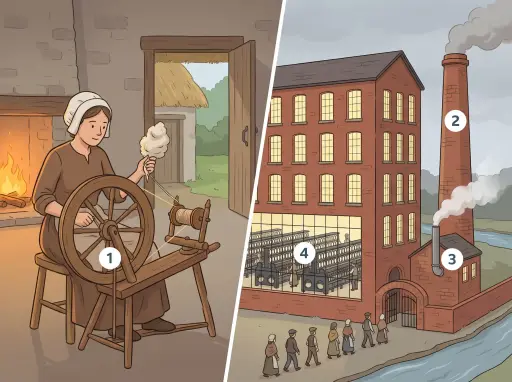
Around 1760 in Britain, coal-fired steam engines began turning the machines inside textile factories. The engine’s motion reached rows of spinning machines through shafts and leather belts.
This picture is part of the full library
Every lesson is open to everyone for 7 days after it is published. This one came out on October 13, 2026: its text stays readable here, and its picture opens with a subscription.
The app is free. A subscription opens every lesson, in every school year.
In the picture
- A steam engine flywheel: a heavy iron wheel turned by steam pressure.
- An overhead line shaft and leather belts: a rotating iron shaft carrying motion down to the machines.
- An iron spinning machine with white thread spindles: a frame holding spindles that twist cotton into thread.
- A coal heap: fuel that feeds the fire under the steam engine.
Examples
- Early cotton mills used steam engines to run spinning frames.
- Trains and ships later used steam engines for transport.
Key takeaways
- From about 1760, coal-fired steam engines powered machines in textile factories.
- The Industrial Revolution began in Britain and changed how goods were made.
Quiz: Steam Power in a Cotton Mill (Age 14)
-
From about 1760, what powered the machines in textile factories?
-
In which country did the Industrial Revolution begin?
-
What did the overhead line shaft and leather belts do?
The answers, each with its explanation, are in the app. This lesson has left the free week, so its quiz is part of the subscription.
Free app, optional subscription
App Store Google Play
Carry on in the app
At least one new illustrated lesson every weekday for your child’s year, with its quiz and a reminder at 6:15 pm.
Your child’s teacher does not use My Enhanced Teacher yet?
Tell them about it