Mon Prof Augmenté
The Four Families of the Orchestra
Age 14 · Music
Open to everyone until Friday, October 30
To keep it, print it while it is open.
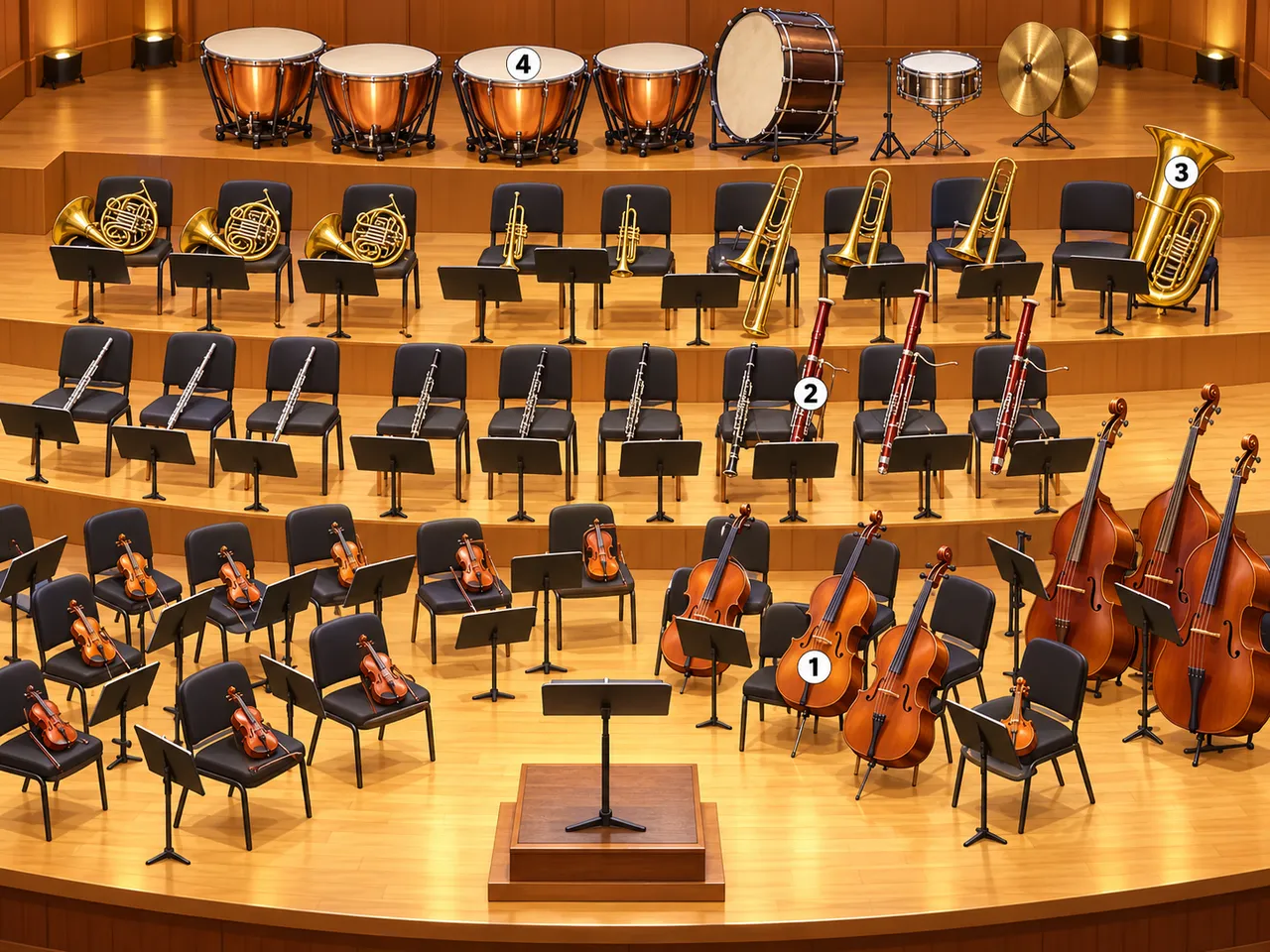
A symphony orchestra is made up of four instrument families, and each family has its own timbre, or tone colour, because of the way it makes sound. The players sit in a set pattern, with the quieter strings at the front near the conductor and the louder brass and percussion further back.
In the picture
- Strings: bowed or plucked strings give a warm, singing sound, so they sit at the front
- Woodwind: air blown across a hole or through a reed gives a breathy or reedy sound, in the middle
- Brass: buzzing lips in a metal mouthpiece give a bright, powerful sound, near the back
- Percussion: instruments that are struck, like timpani and drums, keep the rhythm at the very back
Examples
- A film soundtrack where soft violins play during a sad scene and loud trumpets come in for the battle
- A school concert where the drum kit is placed at the back so it does not drown out the other players
Key takeaways
- Timbre is what makes a flute and a violin sound different even when they play the same note
- The loudest instruments sit at the back so the whole orchestra sounds balanced
Carry on in the app
At least one new illustrated lesson every weekday for your child’s year, with its quiz and a reminder at 6:15 pm.
Get the app
Free app, optional subscription
App Store Google Play
Your child’s teacher does not use My Enhanced Teacher yet?
Tell them about it