Mon Prof Augmenté
When an ocean plate dives under a continent
Age 14 · Geography
Open to everyone until Thursday, October 29
To keep it, print it while it is open.
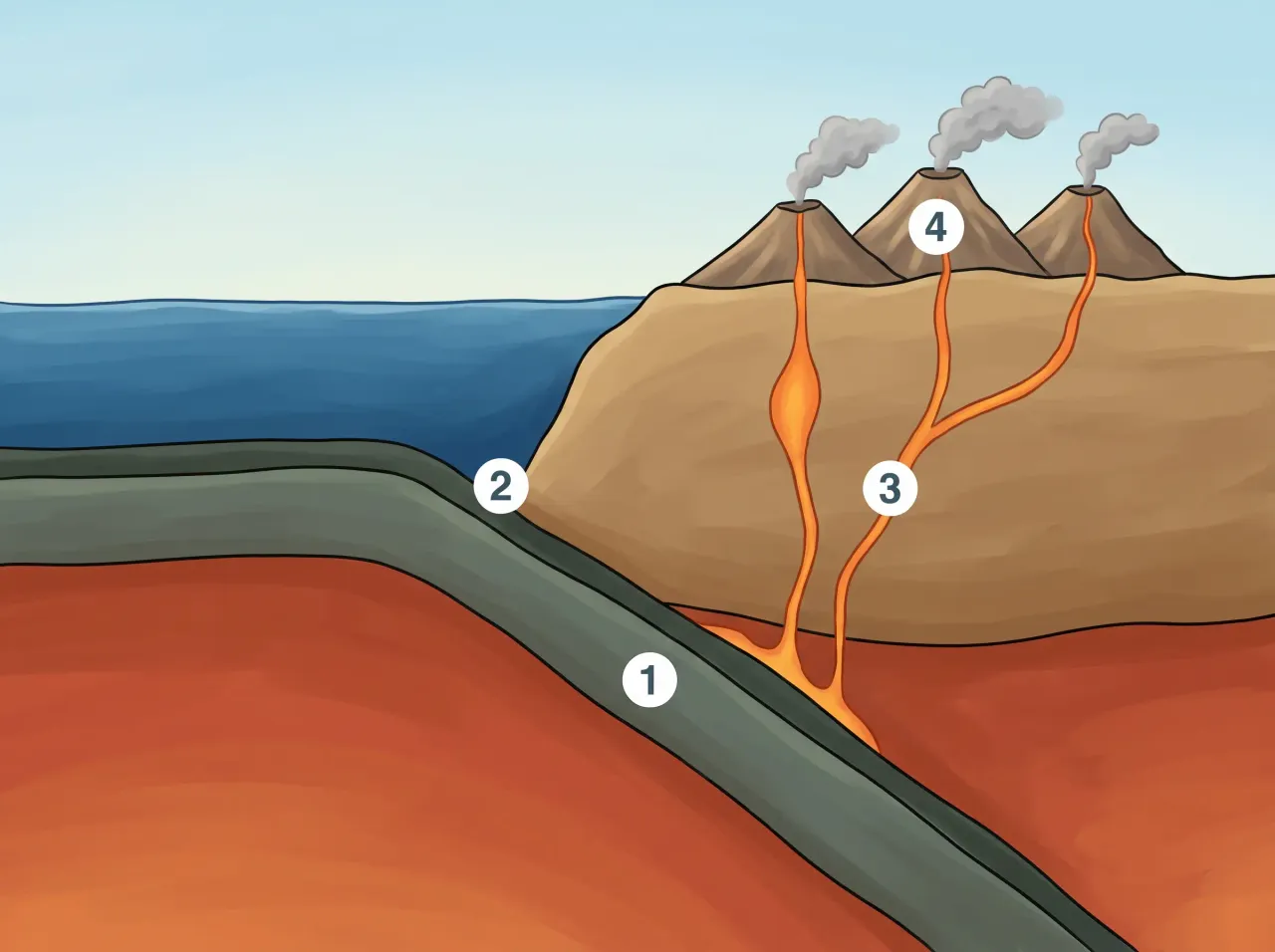
Where two plates collide, the heavier oceanic plate sinks beneath the lighter continental plate, a process called subduction. This carves a deep trench in the seabed, and rock that melts above the sinking plate rises as magma to build a chain of volcanoes.
In the picture
- Oceanic plate: thin, dense crust that sinks beneath the continent
- Ocean trench: the deep trough where the oceanic plate dives down
- Magma: molten rock rising from above the sinking plate
- Volcanic chain: a row of volcanoes inland on the continental plate
Examples
- The Andes in South America, where the Nazca plate sinks under South America beside the Peru–Chile Trench.
- The Cascade volcanoes in the north-western United States, such as Mount St. Helens, fed by the Juan de Fuca plate sinking under North America.
Key takeaways
- Oceanic crust is denser than continental crust, so the oceanic plate is the one that sinks.
- Subduction zones produce deep trenches, volcanoes and powerful earthquakes.
Quiz: When an ocean plate dives under a continent (Age 14)
-
When an oceanic plate and a continental plate collide, which one sinks, and why?
-
What forms in the seabed at the place where the oceanic plate dives down?
-
Where does the magma that builds the chain of volcanoes come from?
The answers, each with its explanation, are in the app. This quiz is free there while the lesson is in the free week.
Get the app
Free app, optional subscription
App Store Google Play
Carry on in the app
At least one new illustrated lesson every weekday for your child’s year, with its quiz and a reminder at 6:15 pm.
Your child’s teacher does not use My Enhanced Teacher yet?
Tell them about it