Mon Prof Augmenté
Magma Rising at a Seafloor Split
Age 14 · Geography

Two rocky plates pull apart on the ocean floor, opening a crack. Hot magma rises through the crack and spills out as lava, cooling into new ocean crust.
This picture is part of the full library
Every lesson is open to everyone for 7 days after it is published. This one came out on October 6, 2026: its text stays readable here, and its picture opens with a subscription.
The app is free. A subscription opens every lesson, in every school year.

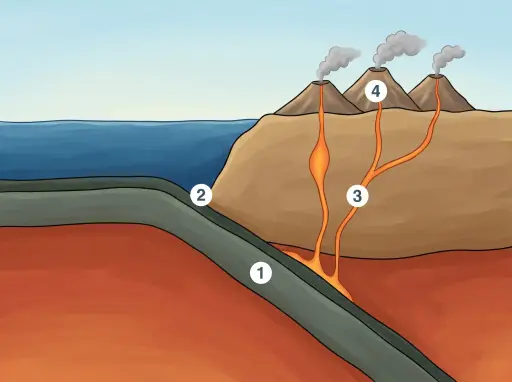
In the picture
- Rock plate edge: solid crust moving away from the gap
- Central crack: an opening where the plates separate
- Rising magma: hot melted rock moving upward from below
- Pillow lava: cooled lava building new seafloor crust
Examples
- Two ice floes drifting apart with water rising in the gap between them
- A loaf of bread tearing open as it rises in the oven
Key takeaways
- New oceanic crust forms where plates pull apart
- Most of this activity happens underwater and stays hidden
Quiz: Magma Rising at a Seafloor Split (Age 14)
-
Where does new oceanic crust form?
-
At a seafloor split, what does the hot magma do?
-
What is true about most of this plate-spreading activity?
The answers, each with its explanation, are in the app. This lesson has left the free week, so its quiz is part of the subscription.
Free app, optional subscription
App Store Google Play
Carry on in the app
At least one new illustrated lesson every weekday for your child’s year, with its quiz and a reminder at 6:15 pm.
Your child’s teacher does not use My Enhanced Teacher yet?
Tell them about it