Mon Prof Augmenté
From Spinning Wheel to Cotton Mill
Age 14 · History
Open to everyone until Friday, October 30
To keep it, print it while it is open.
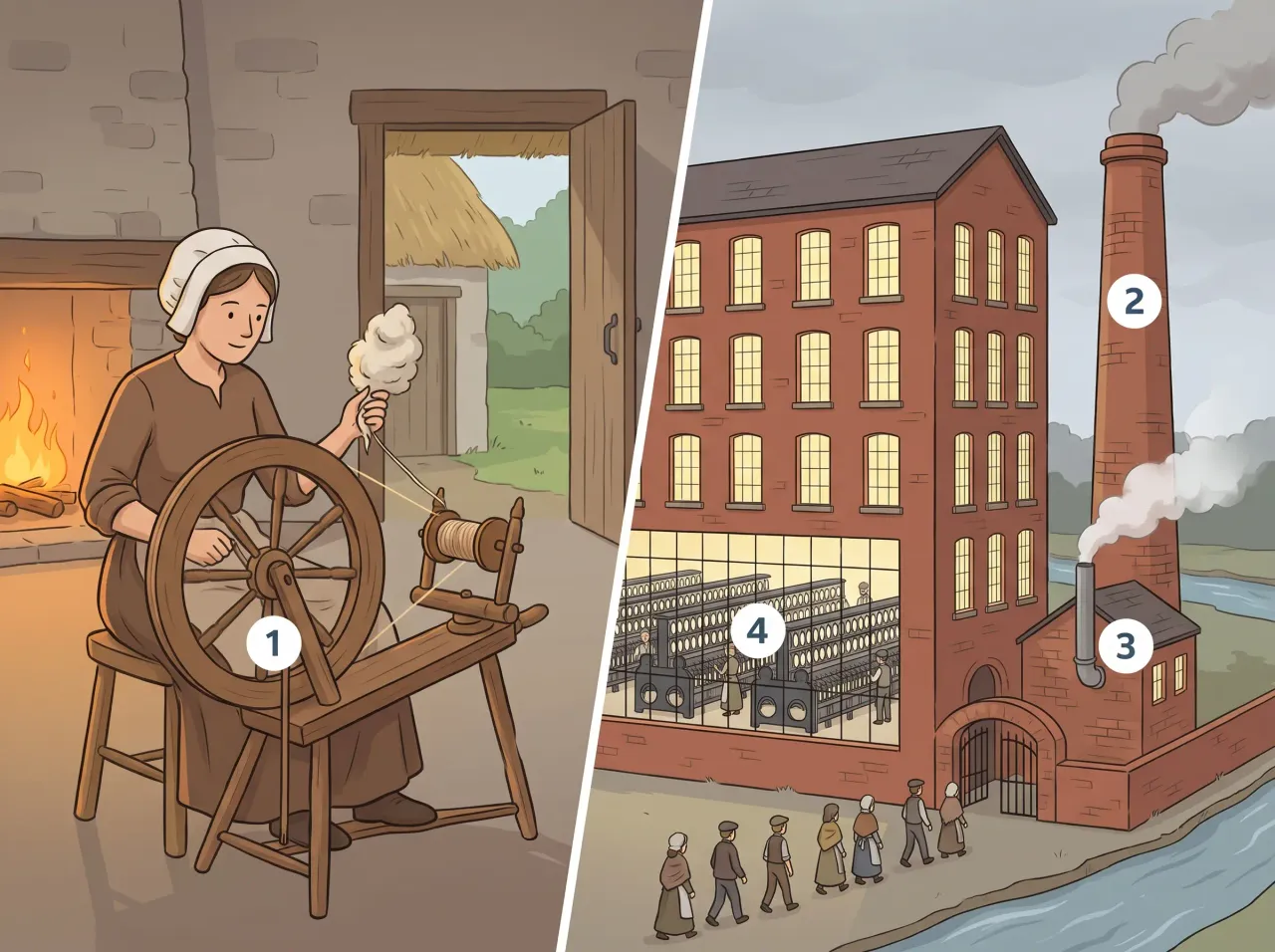
For centuries, families spun thread by hand at home, one thread at a time on a spinning wheel. In the late 1700s, steam engines began driving huge machines in mills, and workers moved from their cottages to factories with fixed hours and wages.
In the picture
- Hand spinning wheel: one worker makes one thread at a time at home
- Mill chimney: coal burning to make the steam that powers the factory
- Engine house: the steam engine that drives every machine in the mill
- Rows of spinning machines: hundreds of threads spun at once by workers tending machines
Examples
- The cotton T-shirt you wear was spun and woven by machines in a factory, not by hand.
- Many big towns grew up around factories because workers moved close to where the jobs were.
Key takeaways
- Steam power let one factory produce far more thread than many families spinning by hand.
- The factory system moved work out of homes and into large buildings with set hours, machines and wages.
Quiz: From Spinning Wheel to Cotton Mill (Age 14)
-
Why could one steam-powered mill make far more thread than many families spinning at home?
-
In a cotton mill of the late 1700s, what drove the spinning machines?
-
How did the factory system change the way people worked?
The answers, each with its explanation, are in the app. This quiz is free there while the lesson is in the free week.
Get the app
Free app, optional subscription
App Store Google Play
Carry on in the app
At least one new illustrated lesson every weekday for your child’s year, with its quiz and a reminder at 6:15 pm.
Your child’s teacher does not use My Enhanced Teacher yet?
Tell them about it