Mon Prof Augmenté
Two Lines to a Point
Age 13 · Maths

From a boat, you can draw a straight line toward a lighthouse and another toward a buoy. On a chart, those two lines cross at the boat’s position.
This picture is part of the full library
Every lesson is open to everyone for 7 days after it is published. This one came out on September 11, 2026: its text stays readable here, and its picture opens with a subscription.
The app is free. A subscription opens every lesson, in every school year.
Age 13: open this week
Browse Age 13
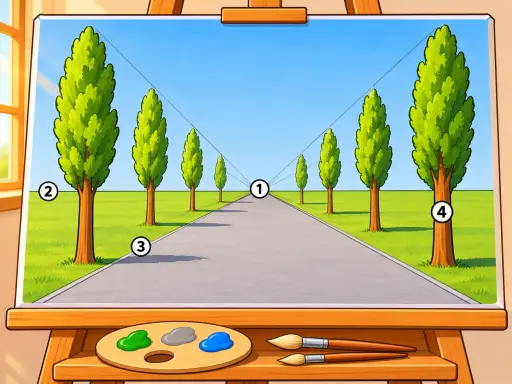

In the picture
- Lighthouse on the headland.
- Buoy on the water.
- Pencil lines crossing on the chart.
- Protractor on the chart.
Examples
- Using two street signs to find where you are on a paper map.
- A map app showing your location where two directions meet.
Key takeaways
- Two different directions can fix one location.
- The crossing point of the two lines is the boat’s position on the chart.
Quiz: Two Lines to a Point (Age 13)
-
When locating a boat by measuring the angle to two landmarks, what do you do on a chart?
-
What does the crossing point of the two direction lines show?
-
Why are two landmarks used instead of only one?
The answers, each with its explanation, are in the app. This lesson has left the free week, so its quiz is part of the subscription.
Free app, optional subscription
App Store Google Play
Carry on in the app
At least one new illustrated lesson every weekday for your child’s year, with its quiz and a reminder at 6:15 pm.
Your child’s teacher does not use My Enhanced Teacher yet?
Tell them about it