Mon Prof Augmenté
Steam, Coal and the Mill
Age 13 · History
Open to everyone until Wednesday, November 18
To keep it, print it while it is open.
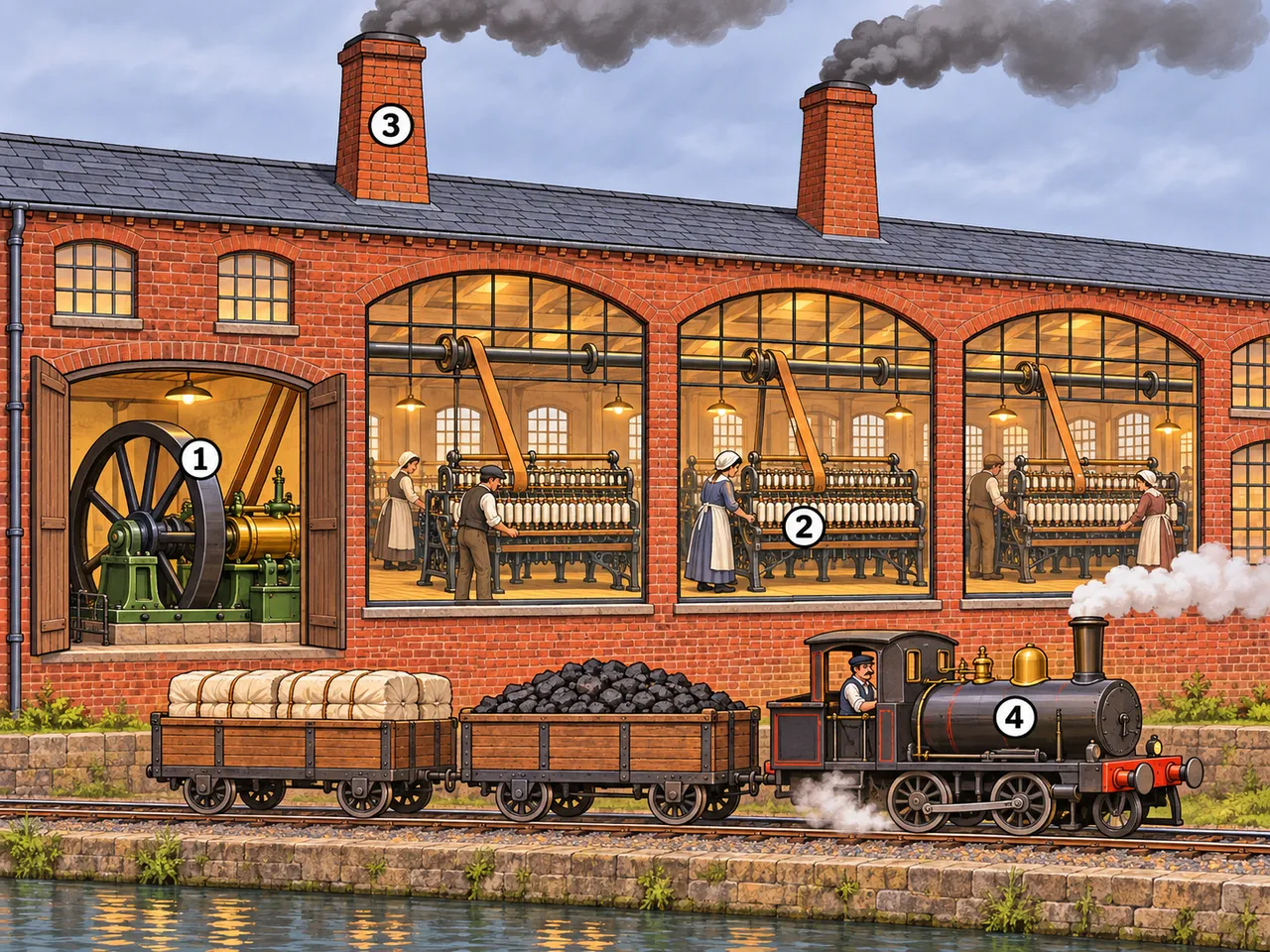
From about 1760, Britain began using machines powered first by water and then by steam engines that burned coal, so goods could be made in large factories instead of at home. Iron rails and steam locomotives then carried coal, raw materials and finished goods faster and further than horses ever could.
In the picture
- Steam engine: burning coal boils water, and the steam drives a wheel that powers the whole mill
- Spinning machines: one machine spins many threads at once, work that once took many people by hand
- Factory chimney: smoke from burning the huge amounts of coal that fed the engines
- Steam locomotive: an engine on iron rails pulling heavy loads of coal and cotton
Examples
- The cotton T-shirt you wear was spun and woven by machines, a method that began in mills like this one
- Trains and railway lines that still cross many countries today grew from the first steam railways of the 1820s and 1830s
Key takeaways
- The Industrial Revolution began in Britain around 1760 and moved production from homes and workshops into factories
- Coal powered steam engines, iron built machines and rails, and railways moved goods quickly
Quiz: Steam, Coal and the Mill (Age 13)
-
What big change in where goods were made began in Britain around 1760?
-
In a steam-powered mill, what was the burning coal used for?
-
Why did railways with steam locomotives matter so much to industry?
The answers, each with its explanation, are in the app. This quiz is free there while the lesson is in the free week.
Free app, optional subscription
App Store Google Play
Carry on in the app
At least one new illustrated lesson every weekday for your child’s year, with its quiz and a reminder at 6:15 pm.
Your child’s teacher does not use My Enhanced Teacher yet?
Tell them about it