Mon Prof Augmenté
Dynamic Balance in a Flask
Age 18 · Chemistry

In a sealed flask, two kinds of molecules change into each other while the mixture stays the same overall. The changes in both directions keep happening at equal rates, so the concentrations remain constant.
This picture is part of the full library
Every lesson is open to everyone for 7 days after it is published. This one came out on October 9, 2026: its text stays readable here, and its picture opens with a subscription.
The app is free. A subscription opens every lesson, in every school year.
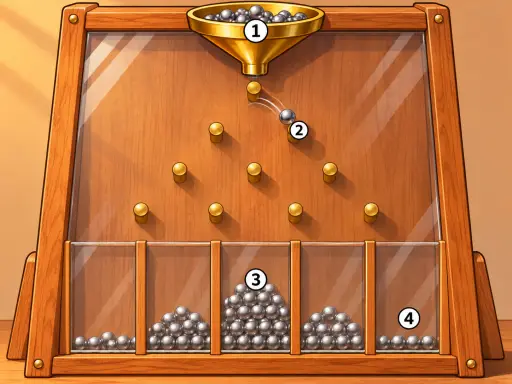
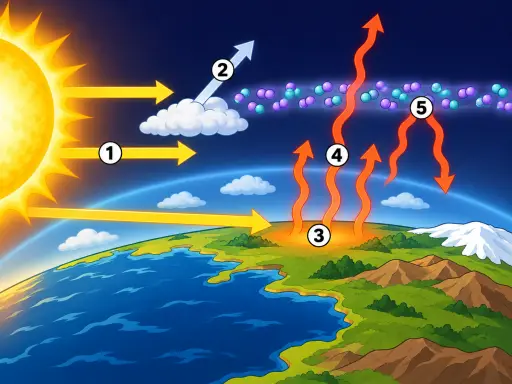
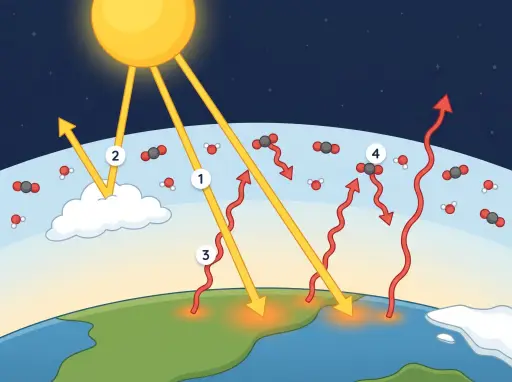
In the picture
- A red molecule in the liquid: one of the two interconverting species.
- A blue molecule in the liquid: the other interconverting species.
- A left-pointing arrow: the change from blue molecules to red molecules.
- A right-pointing arrow: the change from red molecules to blue molecules.
- A level balance beam: equal forward and reverse rates at dynamic balance.
Examples
- Fizzy drink in a sealed bottle: carbon dioxide leaves and re-enters the liquid at the same rate.
- Water in a closed jar: liquid water evaporates and vapour condenses at the same rate.
Key takeaways
- At dynamic equilibrium, both forward and reverse reactions continue; they do not stop.
- Equal rates keep concentrations constant, but the amounts of reactants and products need not be equal.
Quiz: Dynamic Balance in a Flask (Age 18)
-
At dynamic equilibrium, what do the forward and reverse reactions do?
-
When the forward and reverse rates are equal, what happens to the concentrations?
-
At dynamic equilibrium, do the two substances have to be present in equal amounts?
The answers, each with its explanation, are in the app. This lesson has left the free week, so its quiz is part of the subscription.
Free app, optional subscription
App Store Google Play
Carry on in the app
At least one new illustrated lesson every weekday for your child’s year, with its quiz and a reminder at 6:15 pm.
Your child’s teacher does not use My Enhanced Teacher yet?
Tell them about it