Mon Prof Augmenté
Sprint start and acceleration
Age 16 · Sports
Open to everyone until Monday, November 23
To keep it, print it while it is open.
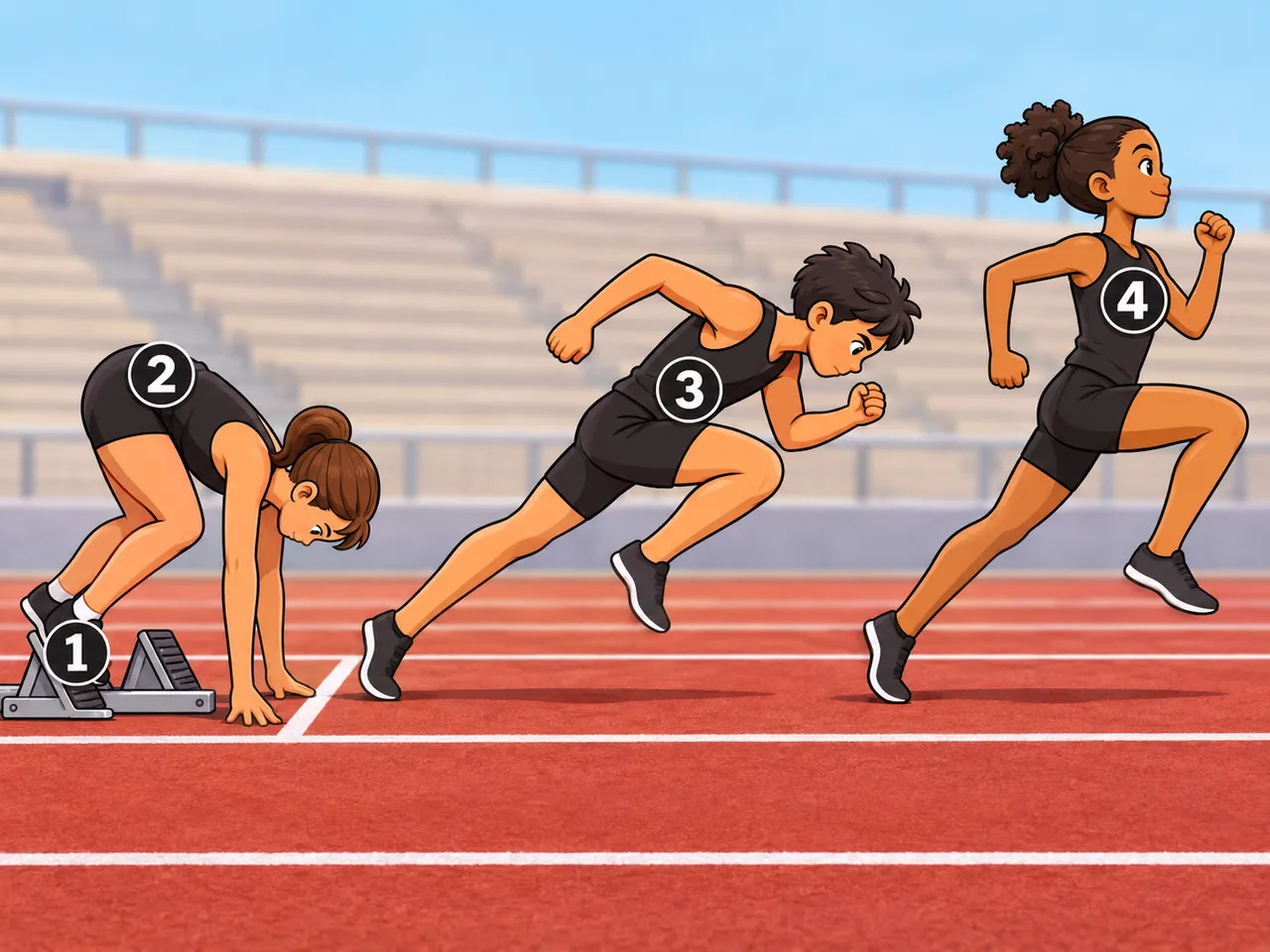
A sprinter starts crouched with both feet against the blocks, then pushes hard to drive forward. The body rises gradually as speed builds, until the runner is upright at top speed.
In the picture
- Starting blocks: footplates the feet push against to launch
- Crouched set position: hips high, ready to push
- Drive phase: torso leaning low and far forward
- Upright running: torso vertical at maximum speed
Examples
- A 100 m runner exploding out of the blocks at the gun
- A rugby winger accelerating from standing to full pace
Key takeaways
- Stand up gradually, not all at once, in the first 30 m
- Low body angle lets the legs push the body forward
Quiz: Sprint start and acceleration (Age 16)
-
During the first 30 m of a sprint, how should the runner’s body position change?
-
Why does a sprinter keep a low body angle at the start?
-
Which body position goes with a sprinter’s maximum speed?
The answers, each with its explanation, are in the app. This quiz is free there while the lesson is in the free week.
Get the app
Free app, optional subscription
App Store Google Play
Carry on in the app
At least one new illustrated lesson every weekday for your child’s year, with its quiz and a reminder at 6:15 pm.
Your child’s teacher does not use My Enhanced Teacher yet?
Tell them about it