Mon Prof Augmenté
How prions leave holes in the brain
Age 16 · Biology
Open to everyone until Monday, November 23
To keep it, print it while it is open.
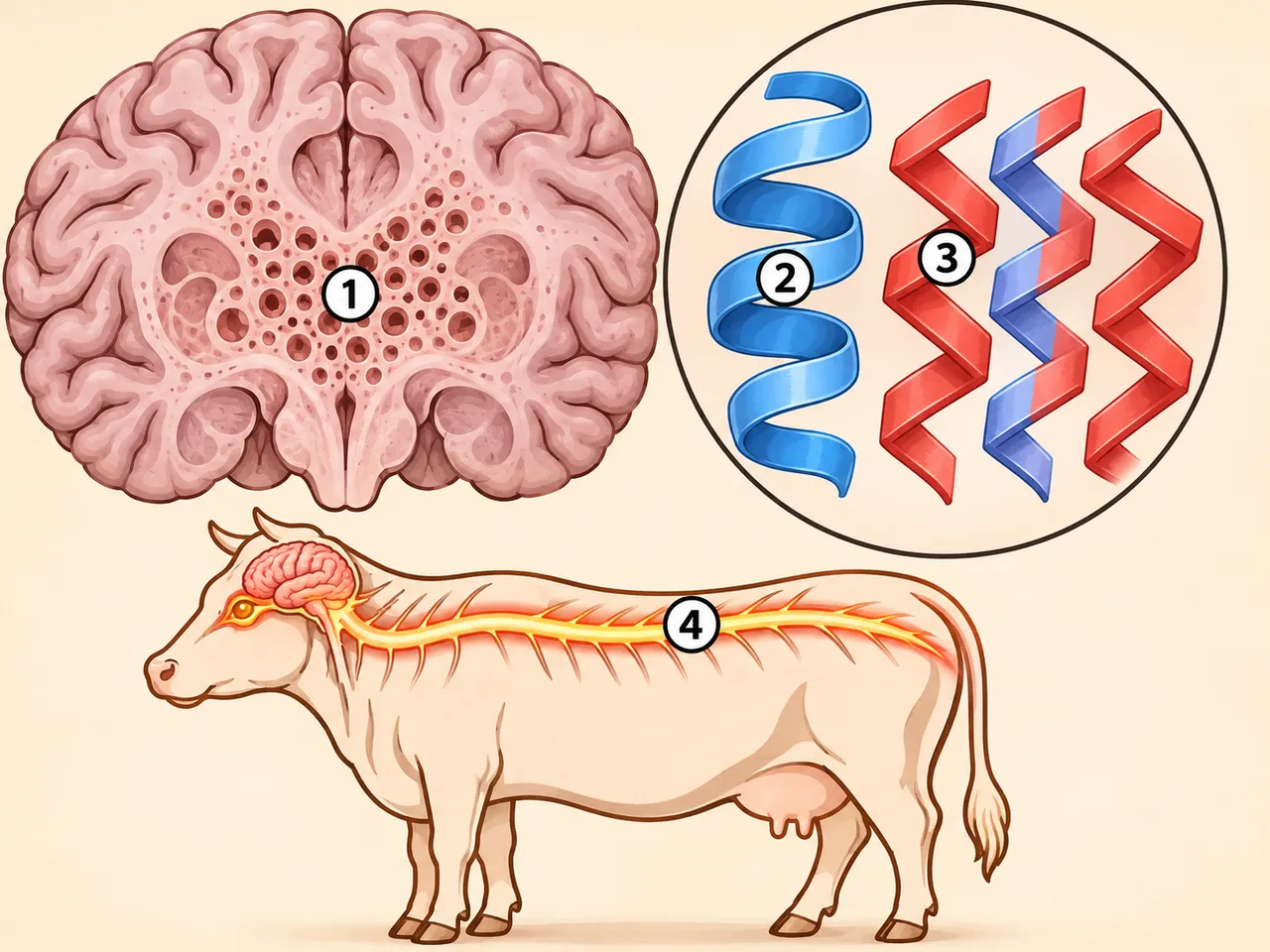
A prion is a normal brain protein that has folded into the wrong shape, and it forces nearby healthy proteins to fold the same wrong way. The misfolded proteins pile up and brain cells die, which leaves the tissue full of tiny holes, as in mad cow disease (BSE).
In the picture
- Brain tissue full of tiny holes: spongy damage where nerve cells have died
- Normal protein: correctly folded into a neat coil
- Misfolded prion: bending neighbouring proteins into its own bad shape
- High-risk tissues: brain, spinal cord and eyes carry the most prions
Examples
- During the 1990s mad cow crisis, brain and spinal cord were banned from the food chain to protect people.
- One bent paperclip pressed into a pile can’t bend the others, but a prion does reshape its neighbours in a chain reaction.
Key takeaways
- Prions are infectious proteins: they contain no DNA or RNA and spread by passing on their wrong shape.
- In infected cattle, the brain, spinal cord and eyes hold the most prions; ordinary cooking does not destroy them.
Quiz: How prions leave holes in the brain (Age 16)
-
How does a prion spread through brain tissue?
-
What makes prions unusual compared with other infectious agents?
-
In infected cattle, which tissues hold the most prions?
The answers, each with its explanation, are in the app. This quiz is free there while the lesson is in the free week.
Get the app
Free app, optional subscription
App Store Google Play
Carry on in the app
At least one new illustrated lesson every weekday for your child’s year, with its quiz and a reminder at 6:15 pm.
Your child’s teacher does not use My Enhanced Teacher yet?
Tell them about it