Mon Prof Augmenté
Steel, electricity and rail, 1870-1914
Age 16 · History
Open to everyone until Wednesday, November 25
To keep it, print it while it is open.
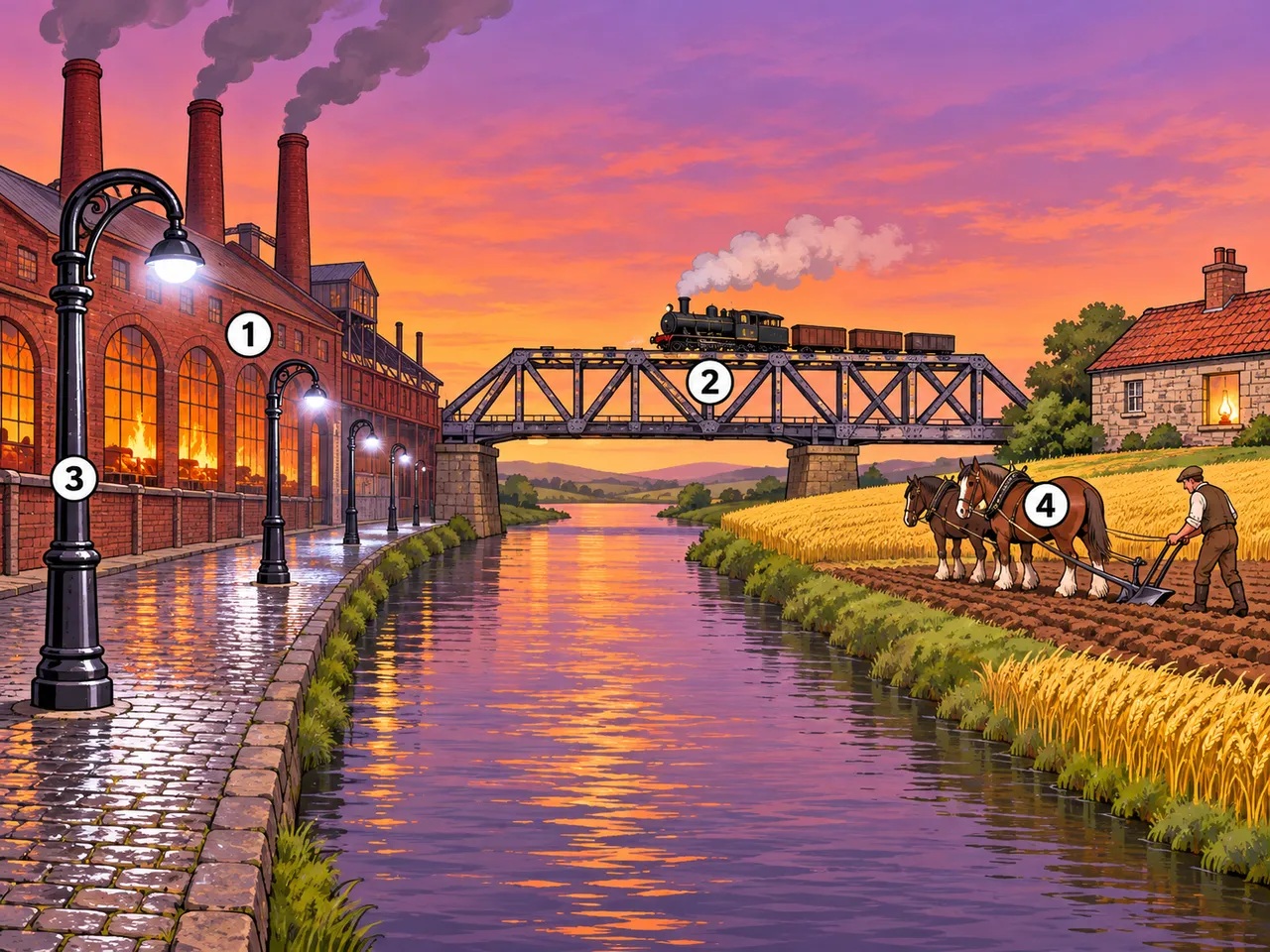
Between 1870 and 1914, cheap steel, electricity and railways changed how people produced, travelled and lit their towns. Yet in most countries the majority of people still lived and worked in the countryside.
In the picture
- The steelworks: new processes turn out steel cheaply and in huge quantities
- The steel bridge and steam train: railways link regions and carry goods and people quickly
- The electric arc lamp: electricity begins to light city streets
- The horse-drawn plough: farm work still relies on animal and human muscle
Examples
- The Forth Bridge in Scotland, opened in 1890, was built from about 54,000 tonnes of steel to carry trains.
- In 1900 a village farmer could still plough with horses while a city a train ride away already had electric street lamps.
Key takeaways
- Steel, electricity and railways drove the second wave of industrialisation after 1870.
- Change was uneven: industrial cities grew fast, while much of society stayed rural.
Quiz: Steel, electricity and rail, 1870-1914 (Age 16)
-
Which three developments drove the second wave of industrialisation after 1870?
-
Between 1870 and 1914, where did the majority of people in most countries still live and work?
-
What changed about steel production in this period?
The answers, each with its explanation, are in the app. This quiz is free there while the lesson is in the free week.
Get the app
Free app, optional subscription
App Store Google Play
Carry on in the app
At least one new illustrated lesson every weekday for your child’s year, with its quiz and a reminder at 6:15 pm.
Your child’s teacher does not use My Enhanced Teacher yet?
Tell them about it