Mon Prof Augmenté
Marmot Hibernation
Age 15 · Biology
Open to everyone until Saturday, October 24
To keep it, print it while it is open.
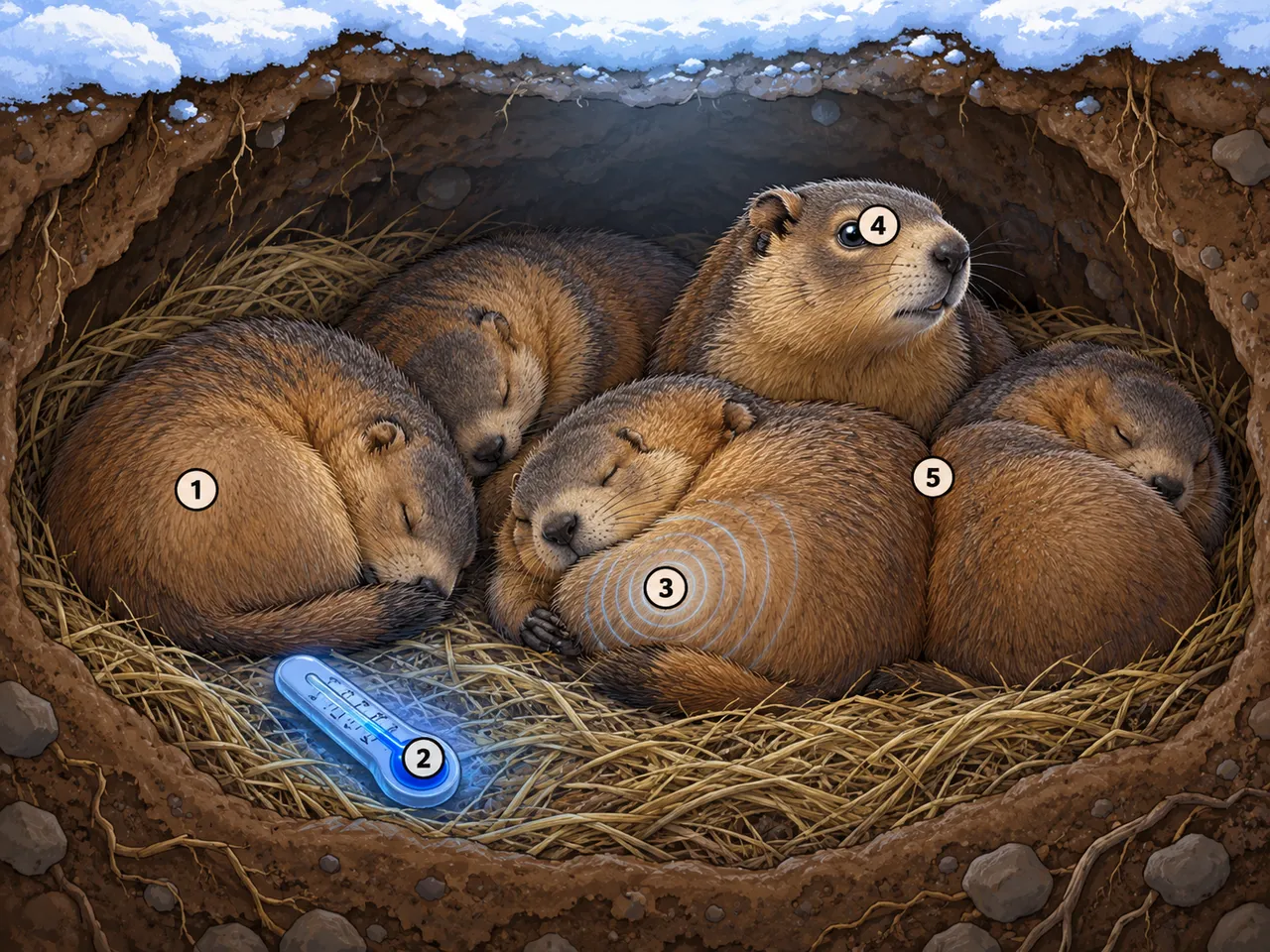
To survive winter, marmots rely on stored fat and let their body temperature and heart rate drop sharply. They huddle together and wake briefly every few weeks before returning to deep torpor.
In the picture
- Rounded fat reserves under the skin: stored energy for winter
- Thermometer with a low blue line: body temperature falls near freezing
- Chest with widely spaced concentric rings: heart rate becomes very slow
- Open eye on a lifted head: brief periodic arousal from torpor
- Touching backs in a huddle: shared warmth that saves energy
Examples
- A phone in battery-saving mode uses very little power until you wake it.
- People on a cold camping trip sleep close together to stay warm.
Key takeaways
- Marmots burn stored fat slowly during winter.
- Huddling and brief arousals help balance energy saving with survival.
Quiz: Marmot Hibernation (Age 15)
-
During hibernation, what happens to a marmot’s body temperature and heart rate?
-
Why do marmots huddle together in winter?
-
What do brief periodic arousals help marmots balance?
The answers, each with its explanation, are in the app. This quiz is free there while the lesson is in the free week.
Get the app
Free app, optional subscription
App Store Google Play
Carry on in the app
At least one new illustrated lesson every weekday for your child’s year, with its quiz and a reminder at 6:15 pm.
Your child’s teacher does not use My Enhanced Teacher yet?
Tell them about it