Mon Prof Augmenté
One jump in one picture
Age 15 · Art
Open to everyone until Thursday, October 29
To keep it, print it while it is open.
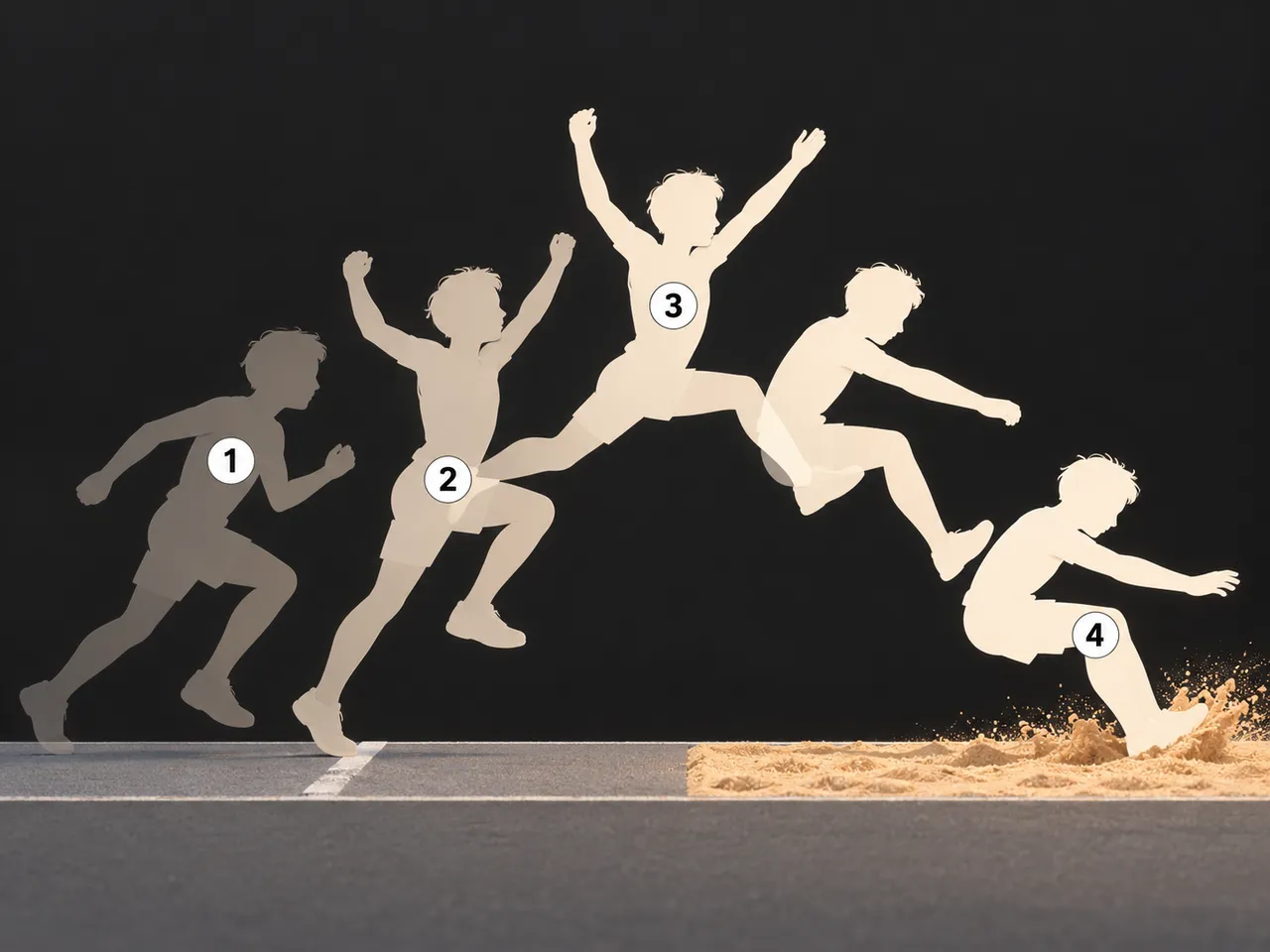
Artists can show movement in a still image by repeating the same body in successive positions, side by side or overlapping. Your eye reads the poses in order, as if watching the motion unfold over time.
In the picture
- Run-up: the faintest pose marks where the motion begins
- Take-off: the foot pushes off and the body starts to rise
- Peak of the flight: the highest point of the arc
- Landing: the brightest pose shows where the motion ends
Examples
- A phone’s burst-mode photos of a skateboard trick, layered into one image
- A long-exposure night photo where a car’s headlights become a continuous streak of light
Key takeaways
- In the 1880s Étienne-Jules Marey recorded several phases of a movement on a single photographic plate, a technique called chronophotography
- Repeated, overlapping figures turn time into space: left to right becomes before to after
Quiz: One jump in one picture (Age 15)
-
How can an artist show a movement unfolding in a single still image?
-
What did Étienne-Jules Marey’s chronophotography do in the 1880s?
-
In an image made of repeated, overlapping figures, what does reading from left to right stand for?
The answers, each with its explanation, are in the app. This quiz is free there while the lesson is in the free week.
Get the app
Free app, optional subscription
App Store Google Play
Carry on in the app
At least one new illustrated lesson every weekday for your child’s year, with its quiz and a reminder at 6:15 pm.
Your child’s teacher does not use My Enhanced Teacher yet?
Tell them about it