Mon Prof Augmenté
Chromosomes and genes
Age 14 · Biology
Open to everyone until Friday, November 13
To keep it, print it while it is open.
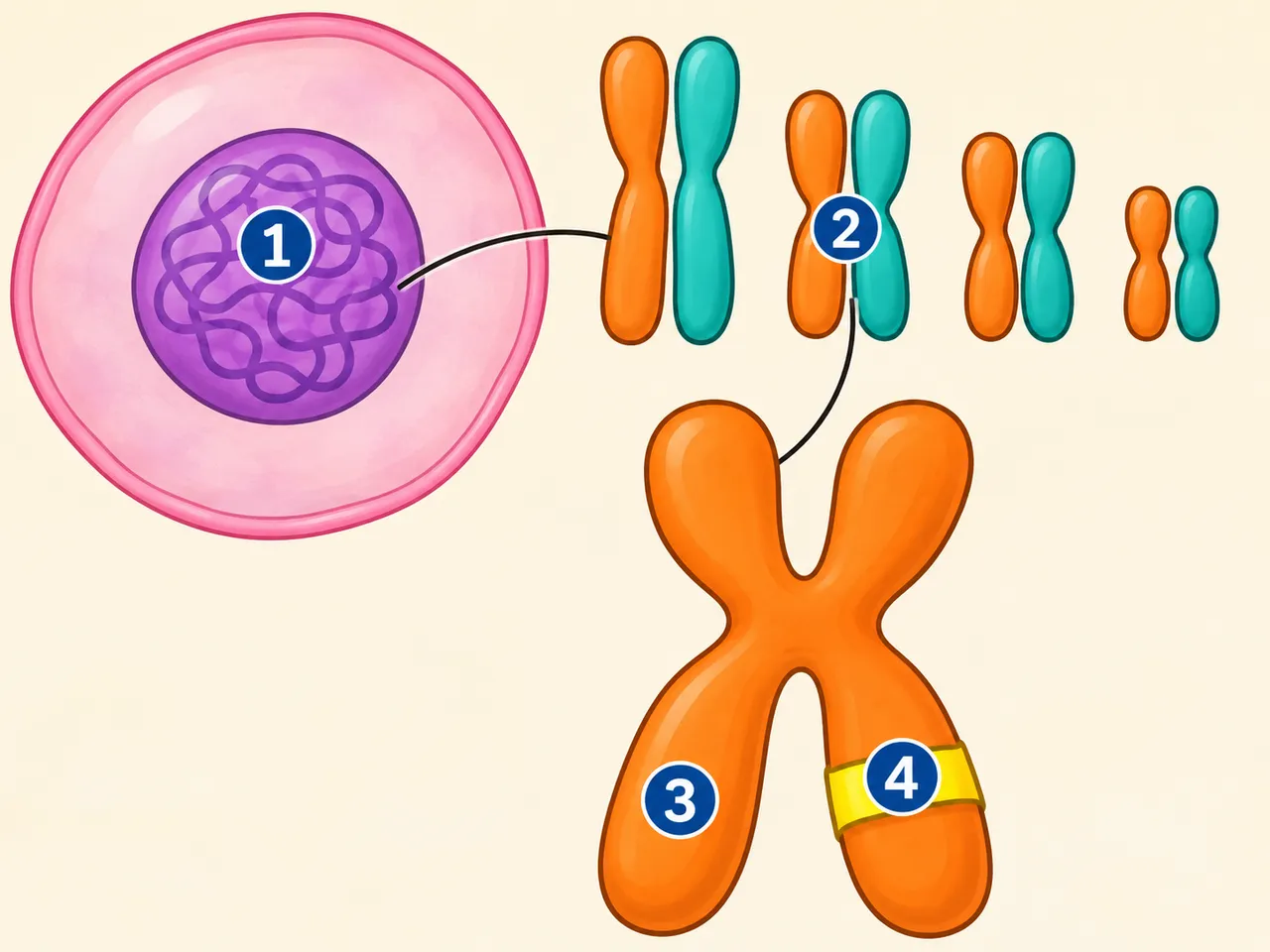
Inside the nucleus of nearly every human cell are 46 chromosomes, which form 23 matched pairs. A gene is a short segment of a chromosome that helps determine a trait.
In the picture
- Nucleus: the cell’s control centre, which holds the chromosomes
- Chromosome pair: two matching chromosomes, one from each parent
- Chromosome: a long coiled DNA molecule carrying many genes
- Gene: a chromosome segment that helps determine one trait
Examples
- Eye colour is influenced by genes on certain chromosomes you inherited from your parents.
- Blood type is set by a gene that you received in one copy from each parent.
Key takeaways
- A human cell has 23 pairs of chromosomes, 46 in total.
- A gene is a segment of a chromosome that helps determine a trait.
Quiz: Chromosomes and genes (Age 14)
-
How many chromosomes does a human cell have?
-
What is a gene?
-
Where do the two chromosomes in a matching pair come from?
The answers, each with its explanation, are in the app. This quiz is free there while the lesson is in the free week.
Get the app
Free app, optional subscription
App Store Google Play
Carry on in the app
At least one new illustrated lesson every weekday for your child’s year, with its quiz and a reminder at 6:15 pm.
Your child’s teacher does not use My Enhanced Teacher yet?
Tell them about it