Mon Prof Augmenté
Mangrove Coast on the Move
Age 12 · Geography
Along one coast, waves wear away a muddy edge while calm water drops new mud at the other end. The mangrove belt slowly shifts toward the side where fresh mud collects.
This picture is part of the full library
Every lesson is open to everyone for 7 days after it is published. This one came out on September 13, 2026: its text stays readable here, and its picture opens with a subscription.
The app is free. A subscription opens every lesson, in every school year.
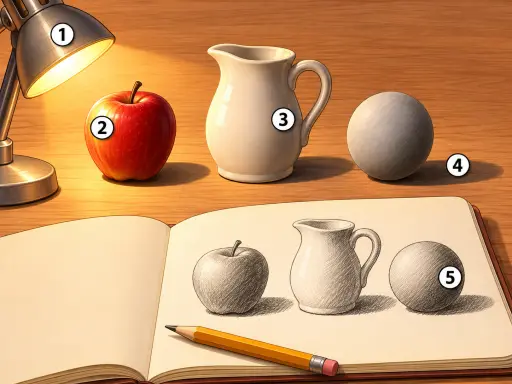
In the picture
- Badge 1 sits on the exposed roots of a toppled mangrove at the eroded edge.
- Badge 2 sits on the breaking wave that cuts into the muddy bank.
- Badge 3 sits on the broad current flowing along the shore.
- Badge 4 sits on young mangrove shoots on the new mudflat.
Examples
- A river bend where one bank crumbles and the other builds a sandbar.
- A beach where winter storms strip sand from one end and summer waves return it to another.
Key takeaways
- Eroded mud is carried by currents and can settle somewhere else.
- Mangroves can spread into new mudflats as older roots are lost.
Quiz: Mangrove Coast on the Move (Age 12)
-
Why does a mangrove belt slowly shift along a coast over time?
-
What happens at the eroded edge of a mangrove coast?
-
Where do young mangrove shoots appear as the mangrove belt shifts?
The answers, each with its explanation, are in the app. This lesson has left the free week, so its quiz is part of the subscription.
Free app, optional subscription
App Store Google Play
Carry on in the app
At least one new illustrated lesson every weekday for your child’s year, with its quiz and a reminder at 6:15 pm.
Your child’s teacher does not use My Enhanced Teacher yet?
Tell them about it