Mon Prof Augmenté
Virus Entering a Cell
Open to everyone until Friday, October 2
To keep it, print it while it is open.
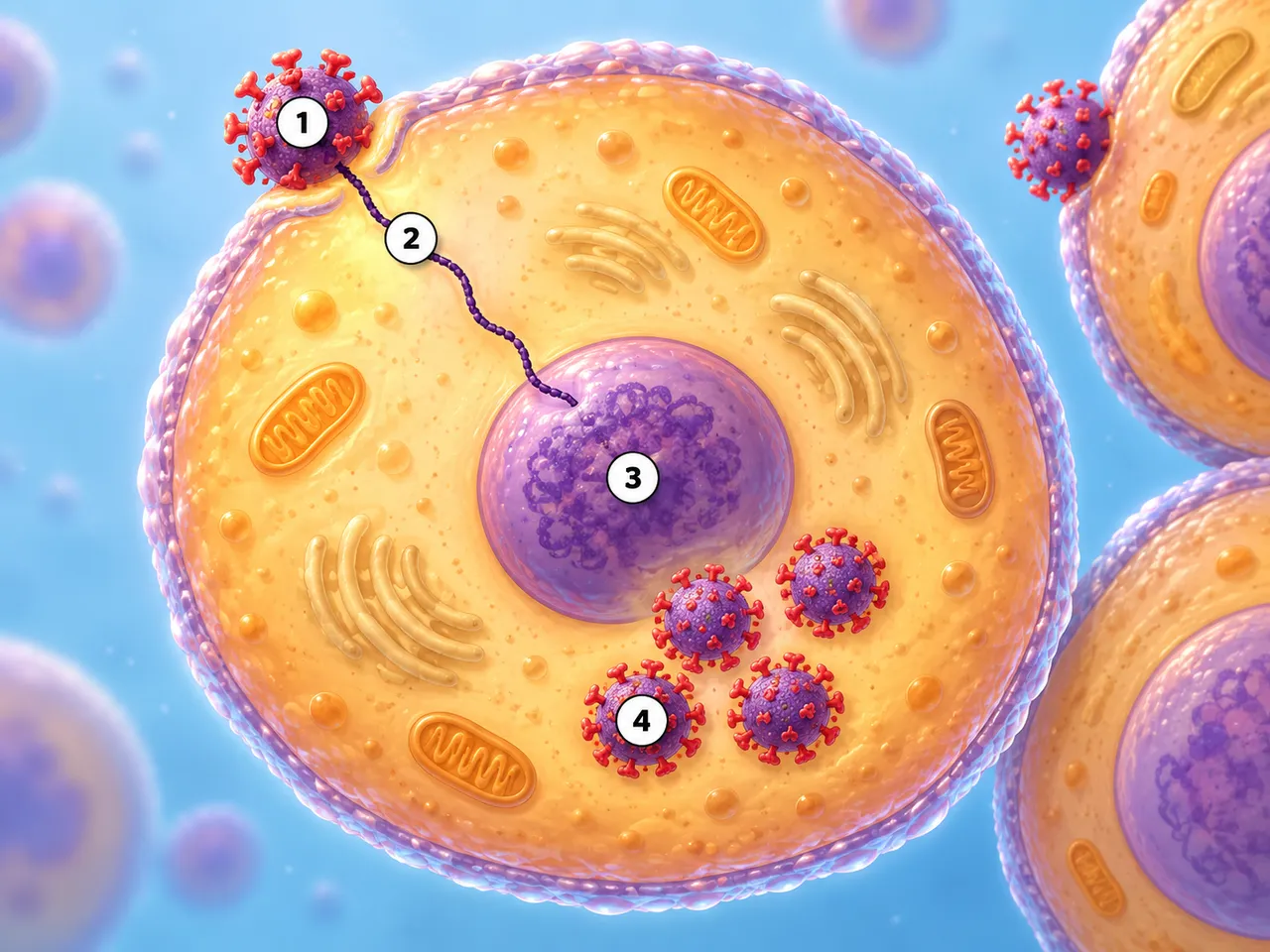
A virus attaches to the outside of a cell and sends its genetic material inside. The cell then makes new virus particles that can go on to infect other cells.
In the picture
- Virus on the cell surface: the virus has attached to the cell membrane.
- Strand crossing the membrane: viral genetic material enters the cell.
- Cell nucleus: the viral genetic material reaches the cell’s control center.
- New virus particles inside the cell: the cell has assembled copies of the virus.
Examples
- A cold virus infecting cells in your nose and throat.
- A flu virus spreading from one cell to another in your lungs.
Key takeaways
- Viruses cannot reproduce on their own; they use a host cell’s machinery.
- New virus particles can leave the cell and attach to nearby cells.
Carry on in the app
Three questions on this lesson, to check the idea stuck. Free in the app while the lesson is in the free week.
At least one new illustrated lesson every weekday for your child’s year, with its quiz and a reminder at 6:15 pm.
Get the app
Free app, optional subscription
App Store Google Play