Mon Prof Augmenté
Cat Purr Vibrations
Open to everyone until Friday, October 2
To keep it, print it while it is open.
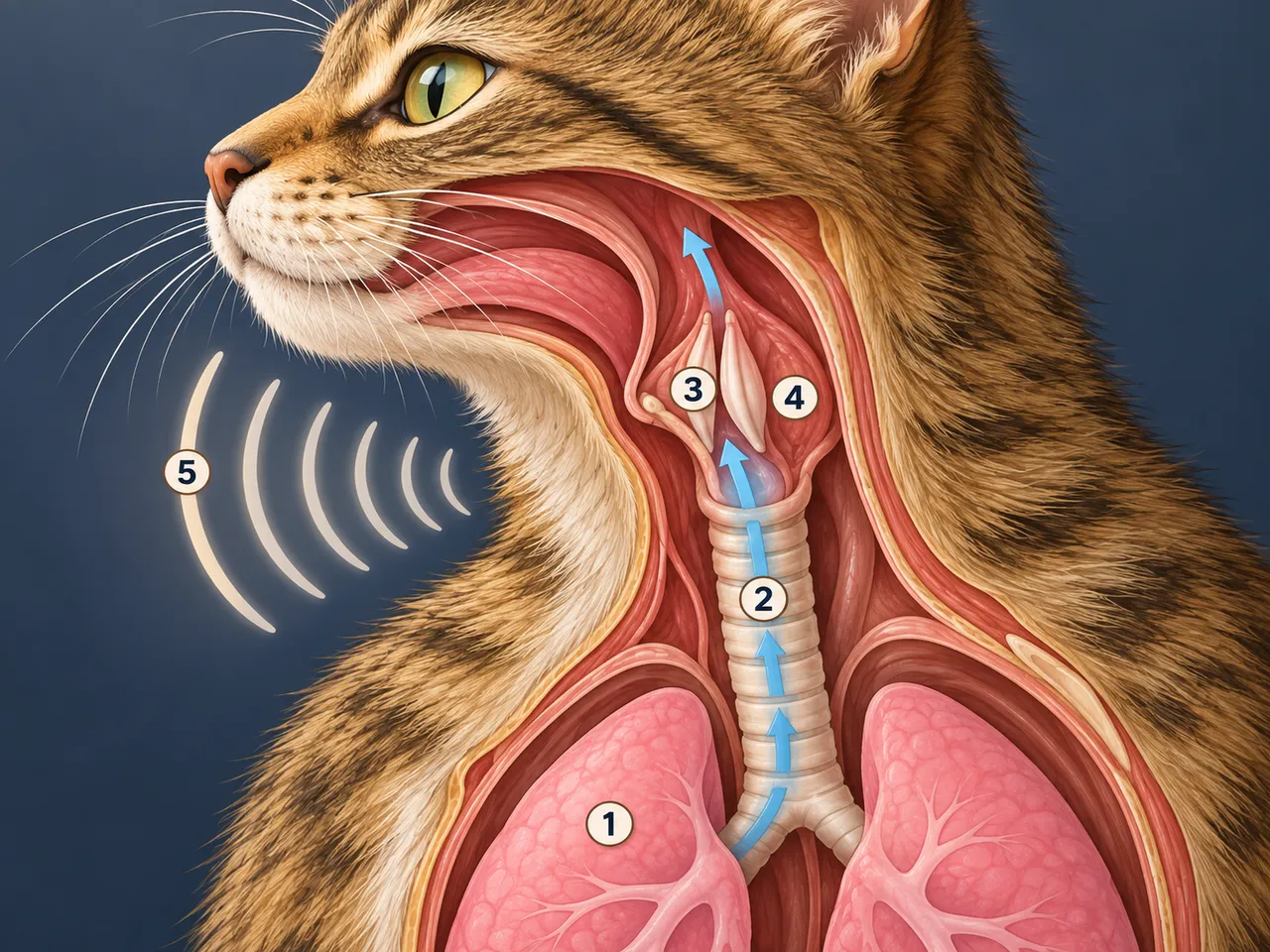
A cat’s purr starts when air moves from the lungs through the trachea. The moving air makes thin folds in the larynx and nearby soft tissue vibrate, producing a steady low sound.
In the picture
- Lungs: air-filled sacs that push air upward.
- Trachea: a ringed tube that carries air to the larynx.
- Vocal folds: thin edges in the larynx that vibrate as air passes.
- Surrounding tissue: soft pads beside the folds that also vibrate.
- Radiating arcs: low-pitched waves spreading from the throat.
Examples
- A cat purring on a lap.
- A cat purring while kneading a blanket.
Key takeaways
- A purr is made by vibrating tissue, not by the mouth alone.
- The sound can continue while a cat breathes in and out.
Carry on in the app
Three questions on this lesson, to check the idea stuck. Free in the app while the lesson is in the free week.
At least one new illustrated lesson every weekday for your child’s year, with its quiz and a reminder at 6:15 pm.
Get the app
Free app, optional subscription
App Store Google Play