Mon Prof Augmenté
Water Clock
Age 11 · Technology
Open to everyone until Monday, October 26
To keep it, print it while it is open.
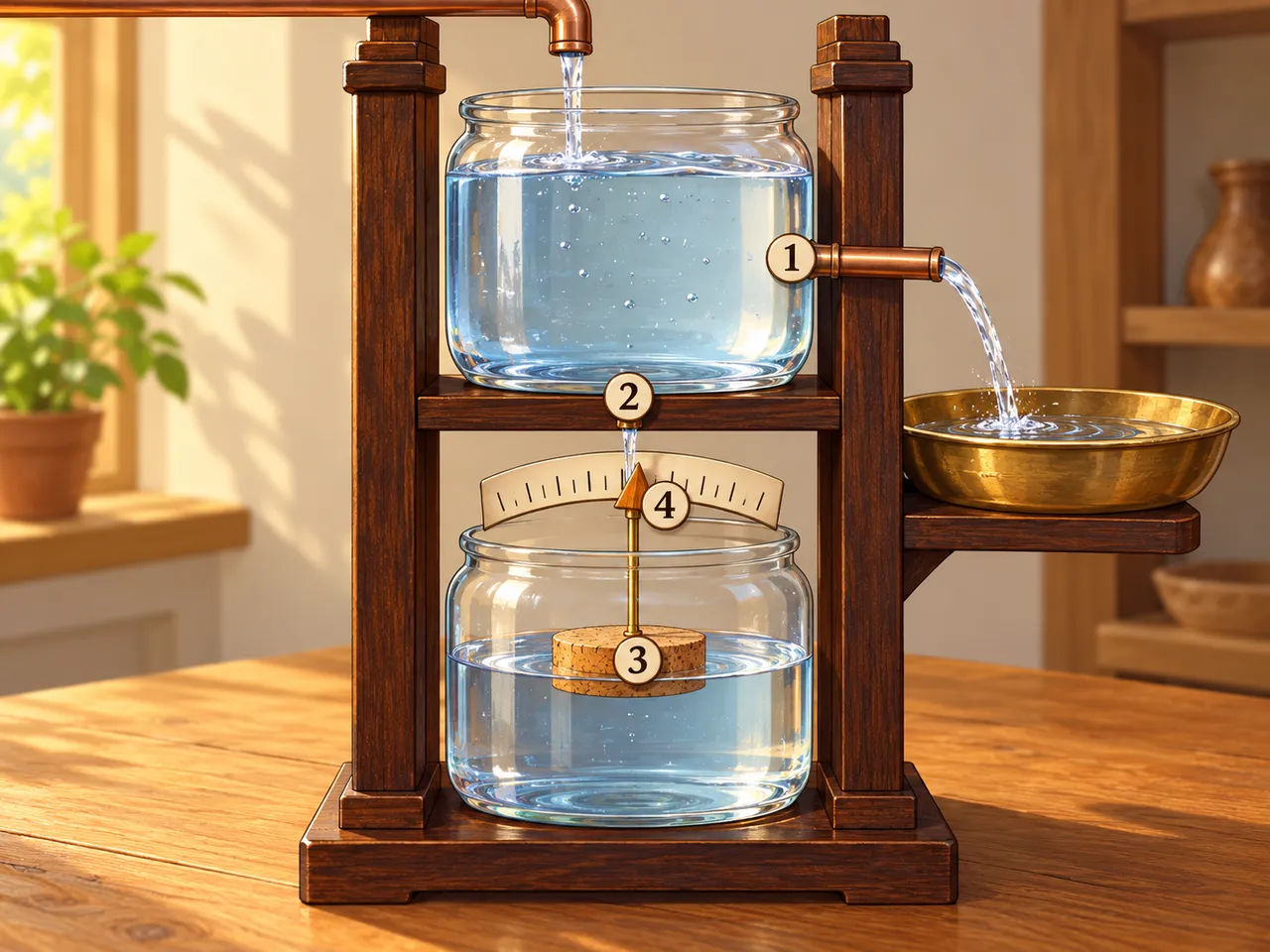
A water clock uses a thin stream of water that falls at a steady rate. As the lower tank fills, a float rises and moves a pointer past marks that show the hours.
Interactive lesson
A machine to operate beside the picture: run it and watch what changes.
The interactive lesson could not be opened. Check the connection and try again.
In the picture
- Upper tank with an overflow spout: keeps the water level constant
- Drip hole: lets out a thin, steady stream
- Float: rises as water gathers in the lower tank
- Pointer on the marked scale: moves upward to show the hour
Examples
- An hourglass: sand falls steadily to mark time.
- A bucket under a dripping tap: the rising water shows how long it has dripped.
Key takeaways
- Keeping the upper water level constant makes the drip rate steady.
- The rising float turns a changing water level into a moving pointer.
Quiz: Water Clock (Age 11)
-
Why does the upper tank have an overflow spout?
-
What happens to the float as water gathers in the lower tank?
-
How does the water clock show the hour?
The answers, each with its explanation, are in the app. This quiz is free there while the lesson is in the free week.
Free app, optional subscription
App Store Google Play
Carry on in the app
At least one new illustrated lesson every weekday for your child’s year, with its quiz and a reminder at 6:15 pm.
Your child’s teacher does not use My Enhanced Teacher yet?
Tell them about it