Mon Prof Augmenté
Rear gears on a bicycle
Age 11 · Technology
Open to everyone until Monday, October 26
To keep it, print it while it is open.
A bicycle chain can sit on different cogs at the rear wheel. Moving the chain from one cog to another changes how hard or easy it is to pedal.
Interactive lesson
A machine to operate beside the picture: run it and watch what changes.
The interactive lesson could not be opened. Check the connection and try again.
In the picture
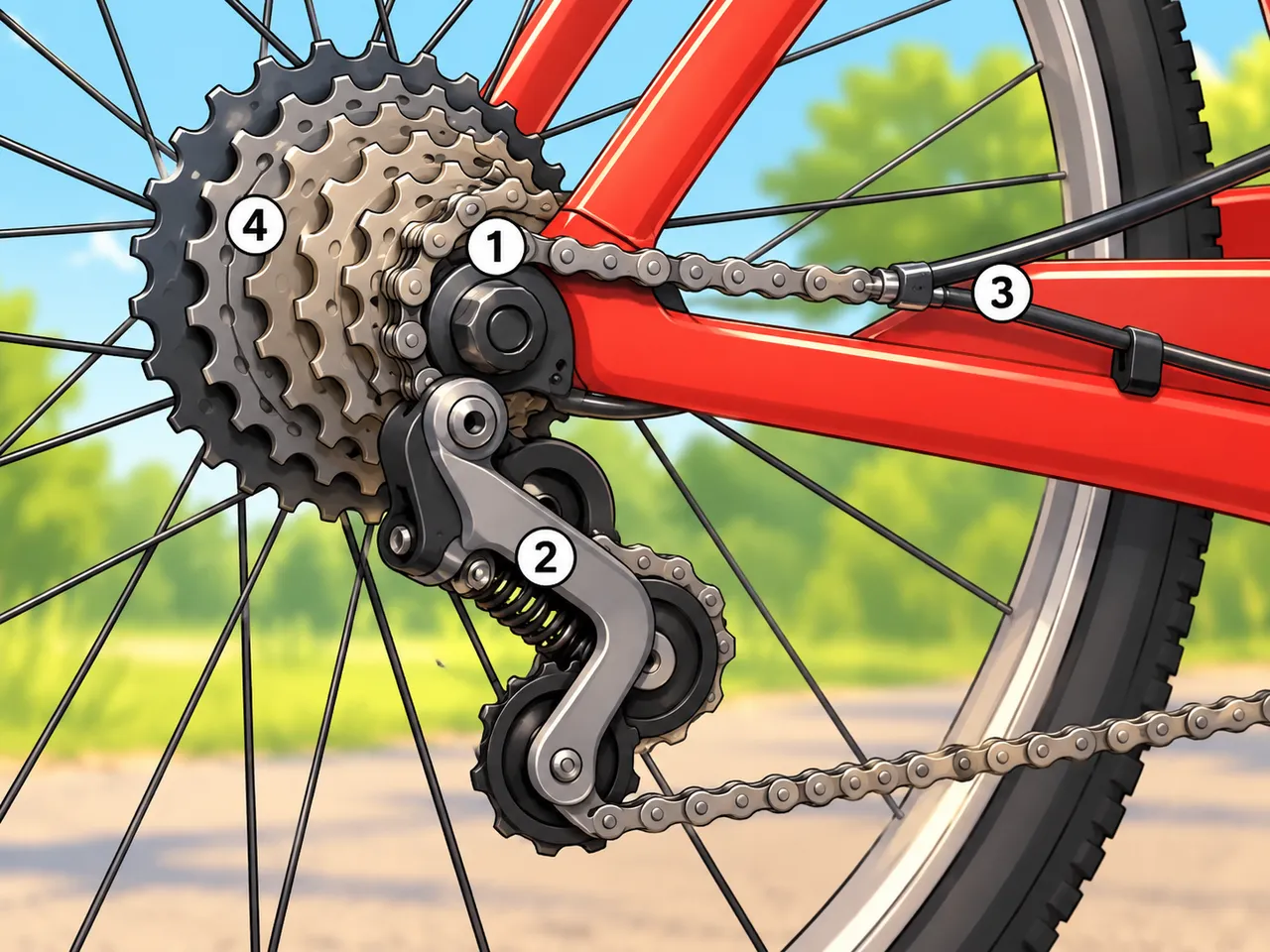
- The chain on a cog: its links fit the teeth and turn the rear wheel.
- The spring-loaded arm: keeps the chain tight and swings to guide it.
- The cable: pulls the arm when the shifter is clicked.
- The stacked cogs: different sizes make the wheel turn faster or slower for each pedal turn.
Examples
- Clicking the shifter to make pedaling easier while riding up a hill.
- Clicking the shifter to go faster on a flat road.
Key takeaways
- The derailleur moves the chain sideways onto a different rear cog.
- A larger rear cog makes pedaling easier, while a smaller rear cog makes the bike go faster for each pedal turn.
Quiz: Rear gears on a bicycle (Age 11)
-
What does the derailleur do?
-
What happens when the chain is on a larger rear cog?
-
When the shifter is clicked, what does the cable do?
The answers, each with its explanation, are in the app. This quiz is free there while the lesson is in the free week.
Get the app
Free app, optional subscription
App Store Google Play
Carry on in the app
At least one new illustrated lesson every weekday for your child’s year, with its quiz and a reminder at 6:15 pm.
Your child’s teacher does not use My Enhanced Teacher yet?
Tell them about it