Mon Prof Augmenté
First Farms and Villages
Age 11 · History

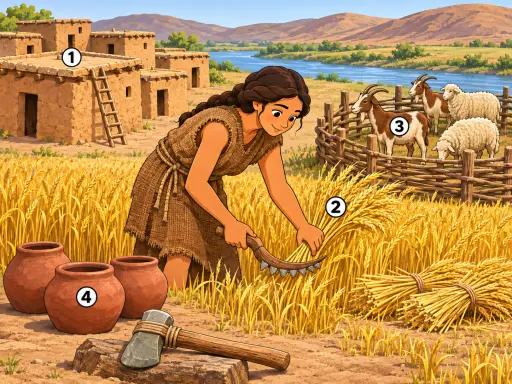
People learned to plant wheat and barley, raise animals, and stay in one place. They built mud-brick houses and stored grain for the months ahead.
This picture is part of the full library
Every lesson is open to everyone for 7 days after it is published. This one came out on October 14, 2026: its text stays readable here, and its picture opens with a subscription.
The app is free. A subscription opens every lesson, in every school year.
Age 11: open this week
Browse Age 11


In the picture
- A curved sickle: a tool for cutting wheat and barley.
- A flat grinding stone: a tool for turning grain into flour.
- A goat in a wattle pen: an animal kept and raised near the village.
- A flat-roofed mud-brick house: a permanent home in one place.
Examples
- A garden where you grow carrots instead of only picking wild berries.
- Keeping chickens in a coop instead of hunting them in the woods.
Key takeaways
- Farming and herding let people make their own food instead of always hunting and gathering.
- Permanent villages grew where people could store grain and keep animals nearby.
Quiz: First Farms and Villages (Age 11)
-
According to the card, what could people do once they began farming and herding?
-
Why did permanent villages grow?
-
What did people learn to plant?
The answers, each with its explanation, are in the app. This lesson has left the free week, so its quiz is part of the subscription.
Free app, optional subscription
App Store Google Play
Carry on in the app
At least one new illustrated lesson every weekday for your child’s year, with its quiz and a reminder at 6:15 pm.
Your child’s teacher does not use My Enhanced Teacher yet?
Tell them about it