Mon Prof Augmenté
Volcano Steam Makes Rain
Age 10 · Science

Early Earth had many erupting volcanoes. Their steam rose, cooled, and fell as heavy rain that gathered in low basins to form the first oceans.
This picture is part of the full library
Every lesson is open to everyone for 7 days after it is published. This one came out on September 23, 2026: its text stays readable here, and its picture opens with a subscription.
The app is free. A subscription opens every lesson, in every school year.
Age 10: open this week
Browse Age 10

In the picture
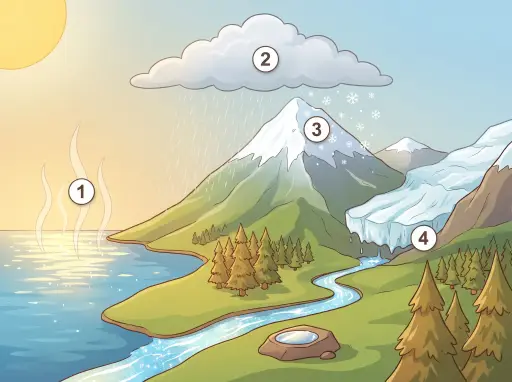
- An erupting volcano: hot rock and gas burst from a vent.
- A rising steam plume: water vapour climbs into the sky.
- Heavy rain: cooled vapour falls as thick drops.
- A filling basin: water collects in a low rocky hollow.
Examples
- A kettle lets out steam that can cool into droplets on a cold window.
- A pot of water on a stove makes steam that condenses on a lid and drips back down.
Key takeaways
- Volcanoes released water vapour from inside early Earth.
- When the vapour cooled, it condensed into rain that helped fill the first oceans.
Quiz: Volcano Steam Makes Rain (Age 10)
-
What did early Earth’s volcanoes release from inside the planet?
-
What happened to the water vapour after it cooled?
-
Where did the heavy rain gather to form the first oceans?
The answers, each with its explanation, are in the app. This lesson has left the free week, so its quiz is part of the subscription.
Free app, optional subscription
App Store Google Play
Carry on in the app
At least one new illustrated lesson every weekday for your child’s year, with its quiz and a reminder at 6:15 pm.
Your child’s teacher does not use My Enhanced Teacher yet?
Tell them about it