Mon Prof Augmenté
A Steam-Powered Factory
Age 10 · History

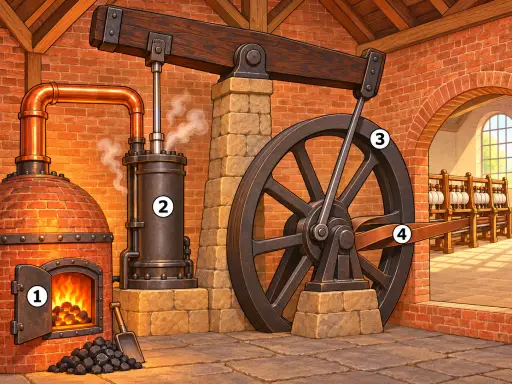
In the 1800s, people burned coal to boil water and make steam, and the steam pushed a big engine. One engine could turn dozens of machines at once, so work moved from small home workshops into huge factories.
This picture is part of the full library
Every lesson is open to everyone for 7 days after it is published. This one came out on October 27, 2026: its text stays readable here, and its picture opens with a subscription.
The app is free. A subscription opens every lesson, in every school year.
Age 10: open this week
Browse Age 10

In the picture
- The firebox: burning coal heats water into steam
- The flywheel: the engine’s steam turns it and spins the shafts on the ceiling
- A weaving loom: a leather belt brings it power so it weaves cloth fast
Examples
- The cotton in your T-shirt is woven by machines in a factory, just as it was in the first steam mills
- A steam train works the same way: coal heats water, and the steam pushes the wheels
Key takeaways
- Steam engines burned coal to power machines
- Factories gathered many workers and machines in one big building
Quiz: A Steam-Powered Factory (Age 10)
-
In the 1800s, what did people burn to make steam for engines?
-
Why did work move from small home workshops into big factories?
-
What was a factory in the industrial age?
The answers, each with its explanation, are in the app. This lesson has left the free week, so its quiz is part of the subscription.
Free app, optional subscription
App Store Google Play
Carry on in the app
At least one new illustrated lesson every weekday for your child’s year, with its quiz and a reminder at 6:15 pm.
Your child’s teacher does not use My Enhanced Teacher yet?
Tell them about it