Mon Prof Augmenté
One Soloist Against an Orchestra
Age 18 · Music
Open to everyone until Monday, November 16
To keep it, print it while it is open.
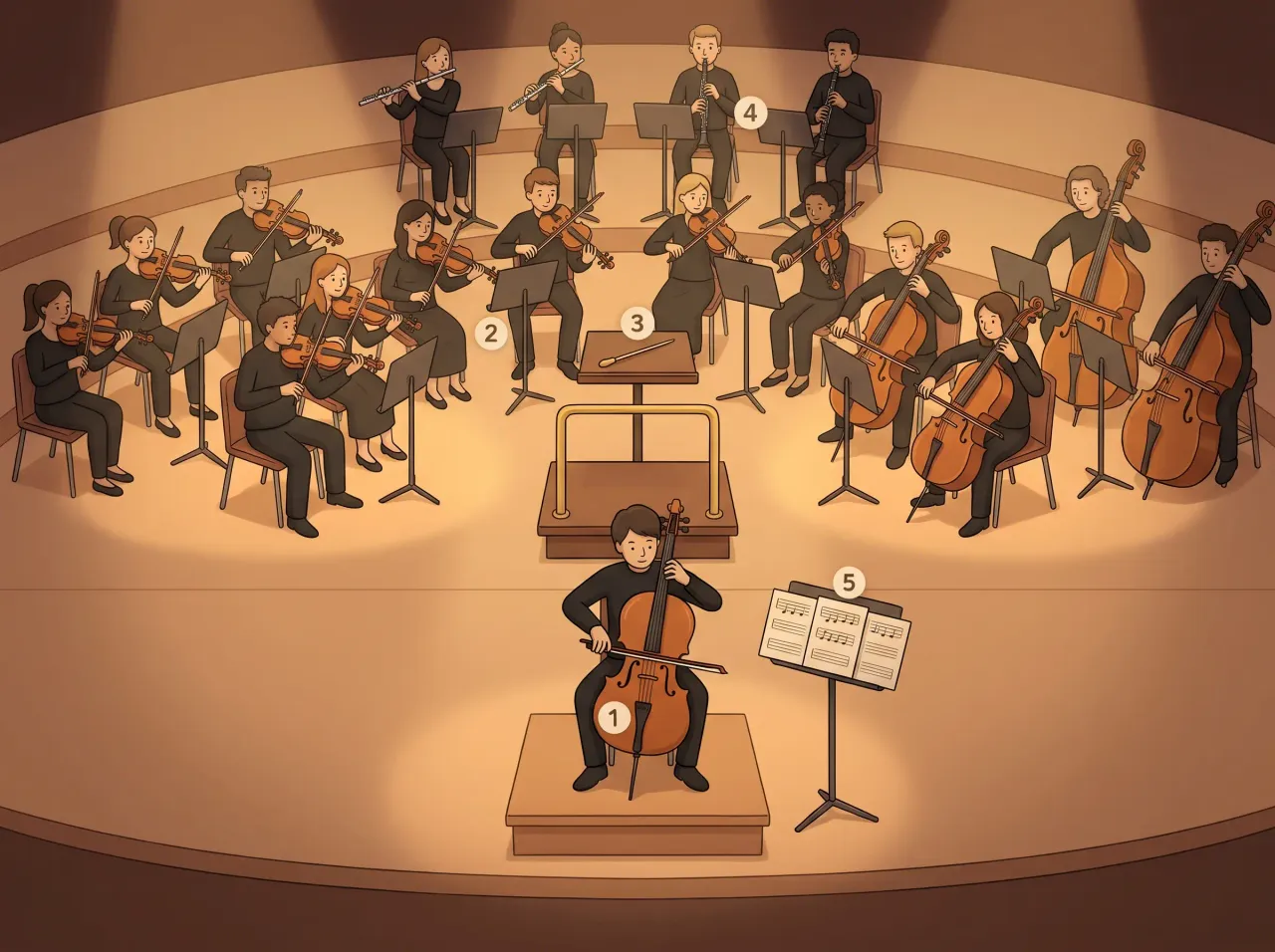
In a solo concerto, one instrumentalist steps forward and trades musical ideas with a full orchestra, sometimes competing with it and sometimes blending in. The work usually comes in three movements, fast, then slow, then fast, and the soloist often shows off in a cadenza, a passage where the orchestra stops.
In the picture
- The soloist: one instrument that carries the main melody and shows off its skill
- The strings: the core of the orchestra, answering and supporting the soloist
- The conductor’s podium: where the conductor keeps soloist and orchestra together
- The winds: extra colours that the orchestra adds around the soloist
- The three movements: fast, slow, fast, each one a separate section of the work
Examples
- Hearing a famous violin concerto where the violinist plays alone for a moment while the whole orchestra waits
- A band concert where one trumpet player stands up for a solo while the rest of the band backs them up
Key takeaways
- A solo concerto sets one soloist in dialogue with a full orchestra
- The usual plan is three movements: fast, slow, fast
Quiz: One Soloist Against an Orchestra (Age 18)
-
What makes a piece of music a solo concerto?
-
What is the usual order of movements in a solo concerto?
-
What happens during a cadenza in a solo concerto?
The answers, each with its explanation, are in the app. This quiz is free there while the lesson is in the free week.
Free app, optional subscription
App Store Google Play
Carry on in the app
At least one new illustrated lesson every weekday for your child’s year, with its quiz and a reminder at 6:15 pm.
Your child’s teacher does not use My Enhanced Teacher yet?
Tell them about it