Mon Prof Augmenté
A Stone Line Made for One Clearing
Age 18 · Art
Open to everyone until Sunday, November 22
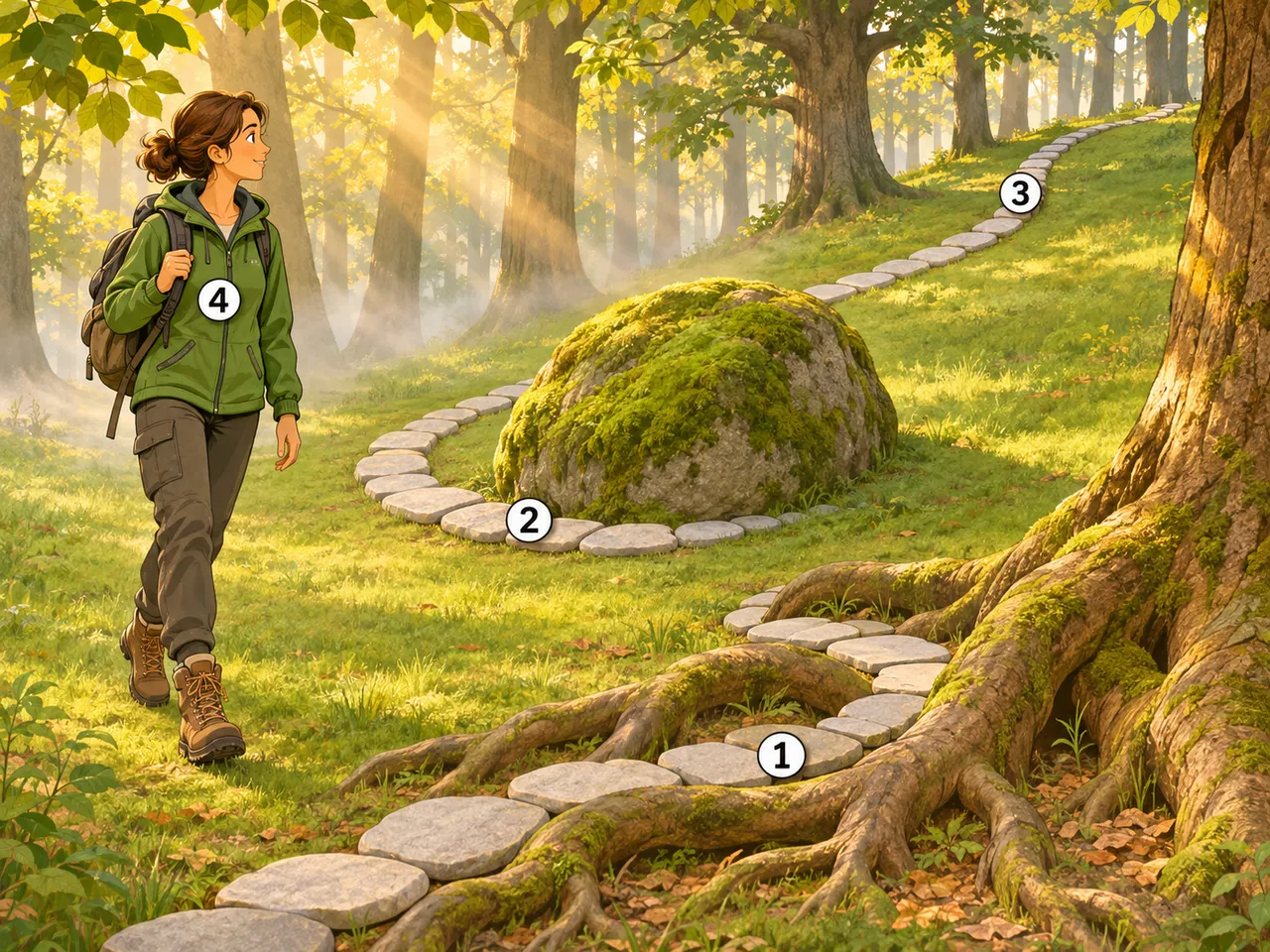
To keep it, print it while it is open.
Site-specific (in situ) art is made for one particular place, and its shape comes from that place’s ground, objects and light. If you moved it somewhere else, its form would no longer fit and its meaning would change.
In the picture
- Stones along the roots: the line copies the shape of the trees growing here
- Curve around the boulder: the work bends to fit an obstacle that belongs to the site
- Stones climbing the slope: the line rises and falls with the real ground
- The walker: the work is experienced by moving through the place itself
Examples
- A mural painted around the windows and pipes of one particular building wall
- A sculpture placed on a beach that the tide covers and uncovers every day
Key takeaways
- In situ art is designed for one place, and the site is part of the work
- Moving a site-specific work changes or destroys its meaning
Quiz: A Stone Line Made for One Clearing (Age 18)
-
What makes a work of art site-specific (in situ)?
-
What happens if a site-specific work is moved to a different place?
-
How is a site-specific work like a stone line in a clearing meant to be experienced?
The answers, each with its explanation, are in the app. This quiz is free there while the lesson is in the free week.
Get the app
Free app, optional subscription
App Store Google Play
Carry on in the app
At least one new illustrated lesson every weekday for your child’s year, with its quiz and a reminder at 6:15 pm.
Your child’s teacher does not use My Enhanced Teacher yet?
Tell them about it