Mon Prof Augmenté
Electricity on the Grid
Age 17 · Daily Life

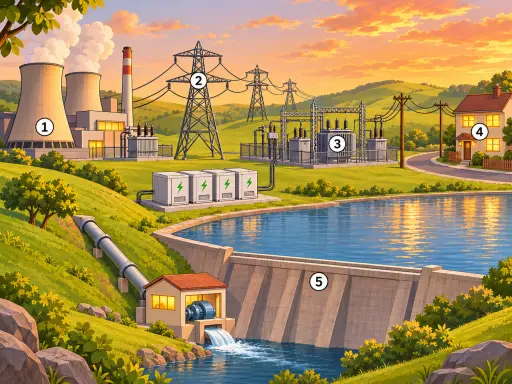
Power plants and wind turbines send electricity through transformers, cables, and substations to homes and factories. Storage and flexible generation keep supply equal to demand from second to second.
This picture is part of the full library
Every lesson is open to everyone for 7 days after it is published. This one came out on October 12, 2026: its text stays readable here, and its picture opens with a subscription.
The app is free. A subscription opens every lesson, in every school year.
In the picture
- Power station: fuel or heat drives generators that produce electricity.
- Step-up transformer: raises voltage so current can travel long distances with lower losses.
- High-voltage pylon: carries the high-voltage line across the landscape.
- Substation: lowers voltage to safe levels for homes and factories.
- Storage connection: battery block and pumped-storage reservoir store energy and release it to balance supply with demand.
Examples
- Charging a phone overnight uses electricity delivered through the local grid.
- A factory running machines on a weekday draws power from the same high-voltage network.
Key takeaways
- Electricity is generated, transformed, transmitted, and distributed before it reaches a socket.
- Storage and flexible plants help match generation to demand when people use more or less power.
Quiz: Electricity on the Grid (Age 17)
-
According to the card, in what order does electricity move before it reaches a socket?
-
Why is a step-up transformer used in the grid?
-
What helps keep electricity supply equal to demand from second to second?
The answers, each with its explanation, are in the app. This lesson has left the free week, so its quiz is part of the subscription.
Free app, optional subscription
App Store Google Play
Carry on in the app
At least one new illustrated lesson every weekday for your child’s year, with its quiz and a reminder at 6:15 pm.
Your child’s teacher does not use My Enhanced Teacher yet?
Tell them about it