Mon Prof Augmenté
How meiosis shuffles genes
Age 17 · Biology
Open to everyone until Friday, November 13
To keep it, print it while it is open.
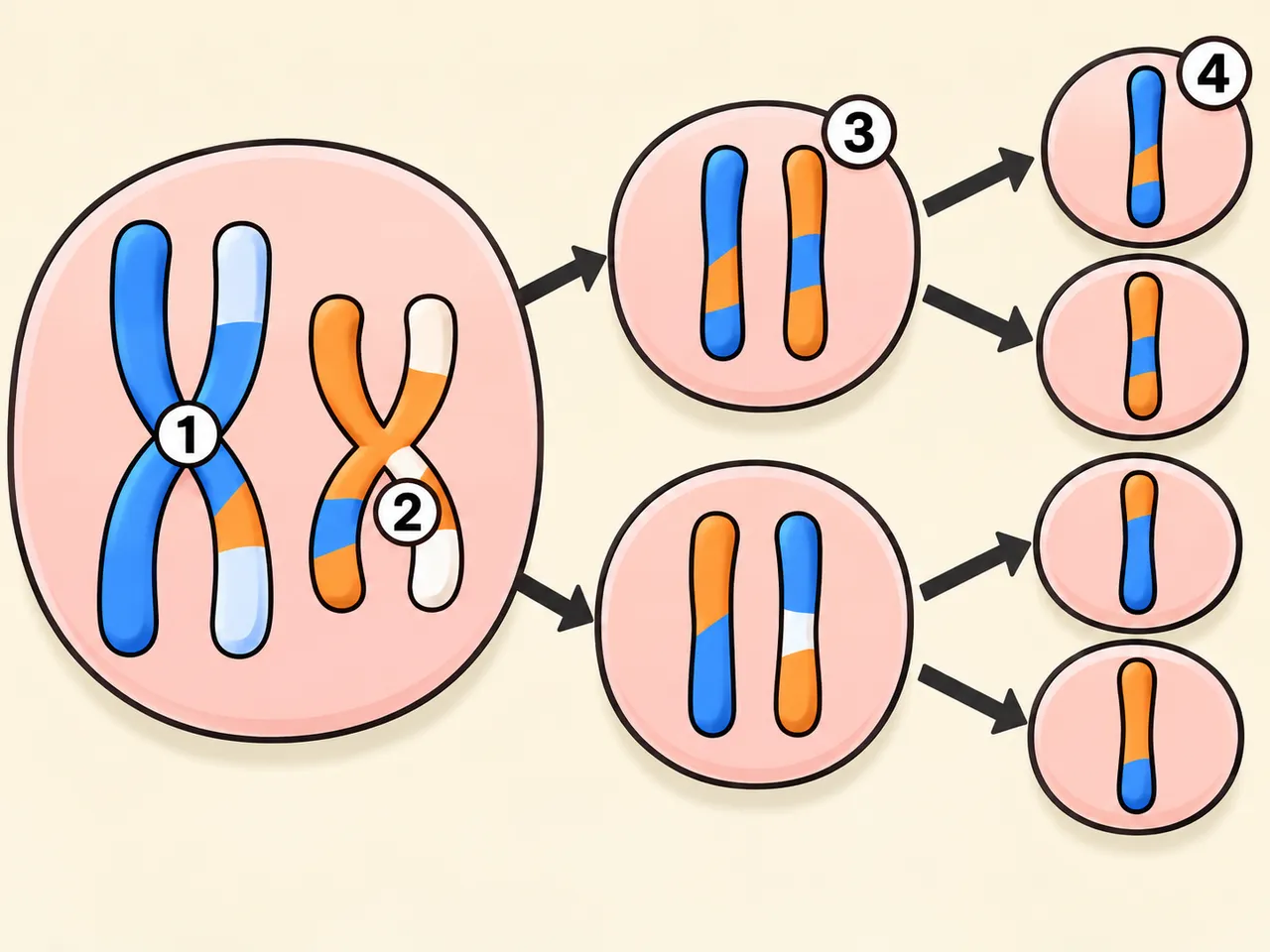
In meiosis, one cell divides twice to make four sex cells, each with half the chromosomes. Before dividing, matching chromosomes swap segments, so every sex cell carries a different mix of genes.
In the picture
- Crossing-over: matching chromosomes swap segments where they touch
- Swapped segment: a piece of one chromosome now sits on its partner
- First division: two cells, each with one chromosome from every pair
- Sex cell: half the chromosomes and a unique mix of genes
Examples
- Siblings from the same parents look alike but are never identical, except identical twins.
- Farmers breed plants and animals knowing that each offspring gets a new combination of traits.
Key takeaways
- Meiosis makes four genetically different cells with half the chromosomes.
- Crossing-over and random sorting create endless variety, which fuels evolution.
Quiz: How meiosis shuffles genes (Age 17)
-
What happens to matching chromosomes before the first division in meiosis?
-
How many cells does one cell make in meiosis, and how many chromosomes does each have compared with the original?
-
Why does meiosis produce so much variety among living things?
The answers, each with its explanation, are in the app. This quiz is free there while the lesson is in the free week.
Get the app
Free app, optional subscription
App Store Google Play
Carry on in the app
At least one new illustrated lesson every weekday for your child’s year, with its quiz and a reminder at 6:15 pm.
Your child’s teacher does not use My Enhanced Teacher yet?
Tell them about it