Mon Prof Augmenté
A puck gliding on ice
Age 15 · Physics

A puck slides across smooth ice and covers the same distance in each equal time interval. Its weight pulls down and the ice pushes up equally, so nothing changes its straight, steady motion.
This picture is part of the full library
Every lesson is open to everyone for 7 days after it is published. This one came out on November 5, 2026: its text stays readable here, and its picture opens with a subscription.
The app is free. A subscription opens every lesson, in every school year.
Age 15: open this week
Browse Age 15

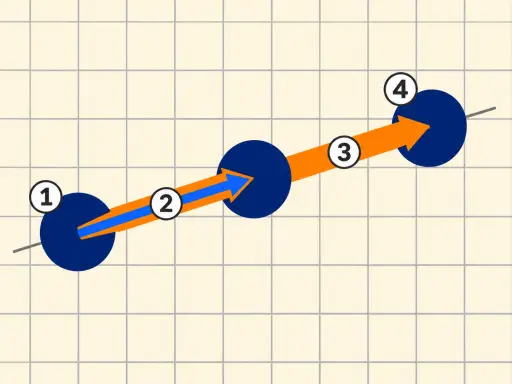
In the picture
- The puck: a moving body that keeps its speed and direction
- Weight: the downward force of gravity on the puck
- Support from the ice: an upward force equal to the weight
- Evenly spaced positions on a straight line: constant speed, no change of direction
Examples
- A hockey puck gliding across an ice rink
- A spacecraft coasting through empty space with its engines off
Key takeaways
- When the forces on a body cancel out, its velocity stays the same.
- A body at rest stays at rest, and a moving body keeps going straight at constant speed.
Quiz: A puck gliding on ice (Age 15)
-
When the forces on a body cancel out, what happens to its velocity?
-
What is needed for a puck to keep gliding in a straight line at constant speed?
-
A puck’s weight pulls it down. How strong is the upward support from the ice?
The answers, each with its explanation, are in the app. This lesson has left the free week, so its quiz is part of the subscription.
Free app, optional subscription
App Store Google Play
Carry on in the app
At least one new illustrated lesson every weekday for your child’s year, with its quiz and a reminder at 6:15 pm.
Your child’s teacher does not use My Enhanced Teacher yet?
Tell them about it