Mon Prof Augmenté
Water in a Dry Valley
Age 15 · Geography

Freshwater is not spread evenly across the planet. Farms and cities use large amounts, so people build dams, pipelines and irrigation systems to store and share it.
This picture is part of the full library
Every lesson is open to everyone for 7 days after it is published. This one came out on October 5, 2026: its text stays readable here, and its picture opens with a subscription.
The app is free. A subscription opens every lesson, in every school year.
Age 15: open this week
Browse Age 15

In the picture
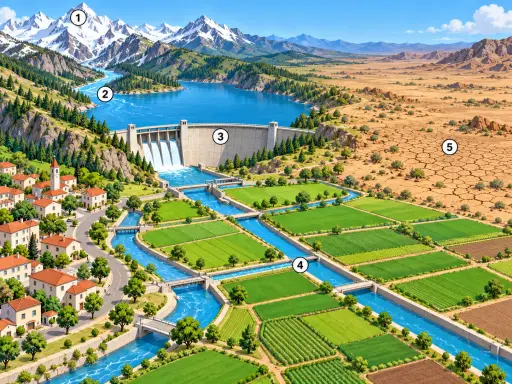
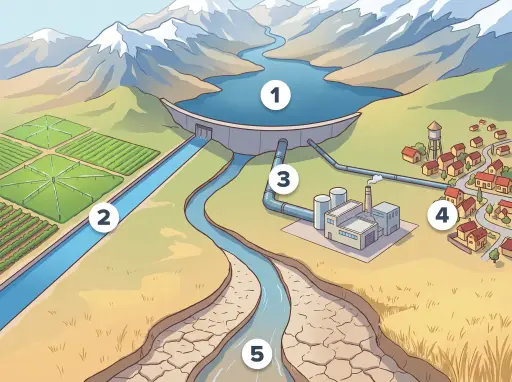
- Pale shoreline band: exposed rock shows a drop in stored water.
- Concrete dam: a barrier that holds back river water.
- Circular irrigated field: crops fed by water led from the river.
- City pipeline: a channel carrying water to homes and businesses.
- Cracked earth: dry ground beyond the watered fields.
Examples
- Two neighbours sharing a household well during a dry summer.
- A city drawing water from a river while farmers upstream use it for crops.
Key takeaways
- Freshwater is unevenly distributed, and demand can exceed local supply.
- Storing, moving and limiting water use are common ways societies cope.
Quiz: Water in a Dry Valley (Age 15)
-
Why can freshwater be hard to manage in some places?
-
What are common ways societies cope with limited freshwater?
-
Why do people build dams, pipelines, and irrigation systems?
The answers, each with its explanation, are in the app. This lesson has left the free week, so its quiz is part of the subscription.
Free app, optional subscription
App Store Google Play
Carry on in the app
At least one new illustrated lesson every weekday for your child’s year, with its quiz and a reminder at 6:15 pm.
Your child’s teacher does not use My Enhanced Teacher yet?
Tell them about it