Mon Prof Augmenté
Diluting a solution
Age 15 · Chemistry
Open to everyone until Monday, November 30
To keep it, print it while it is open.
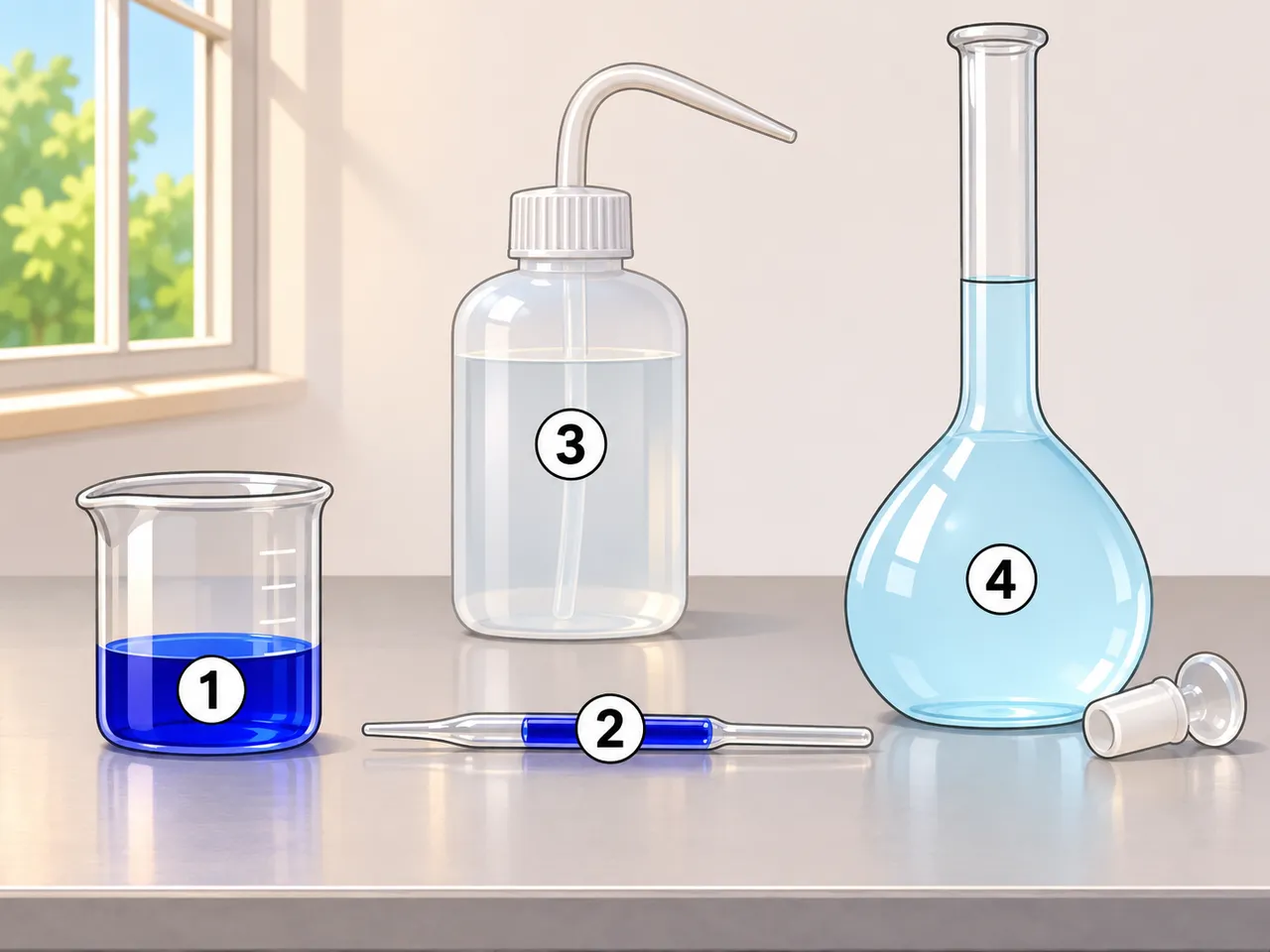
To dilute a solution, you take a small sample and add more solvent to it. The mass of dissolved solute stays the same, but it is spread through a larger volume, so the mass concentration goes down.
In the picture
- Stock solution: deep colour, high mass concentration
- Pipette: takes a precise volume, and with it a fixed mass of solute
- Wash bottle of distilled water: the solvent that is added, with no solute in it
- Volumetric flask filled to the mark: same mass of solute in a larger volume, so a paler, less concentrated solution
Examples
- Adding water to fruit squash: the same amount of syrup is in the glass, but the drink is paler and tastes less sweet.
- Adding water to a soup that is too salty: the salt is all still there, yet each spoonful contains less of it.
Key takeaways
- Dilution adds solvent only: the mass of solute does not change.
- Mass concentration = mass of solute ÷ volume of solution, so a 10 times larger volume gives a 10 times smaller concentration.
Quiz: Diluting a solution (Age 15)
-
When you dilute a solution by adding solvent, what happens to the mass of dissolved solute?
-
A sample of solution is diluted until its volume is 10 times larger. What happens to its mass concentration?
-
Why is distilled water used to dilute a solution?
The answers, each with its explanation, are in the app. This quiz is free there while the lesson is in the free week.
Get the app
Free app, optional subscription
App Store Google Play
Carry on in the app
At least one new illustrated lesson every weekday for your child’s year, with its quiz and a reminder at 6:15 pm.
Your child’s teacher does not use My Enhanced Teacher yet?
Tell them about it