Mon Prof Augmenté
Drinking and Driving
Open to everyone until Saturday, October 3
To keep it, print it while it is open.
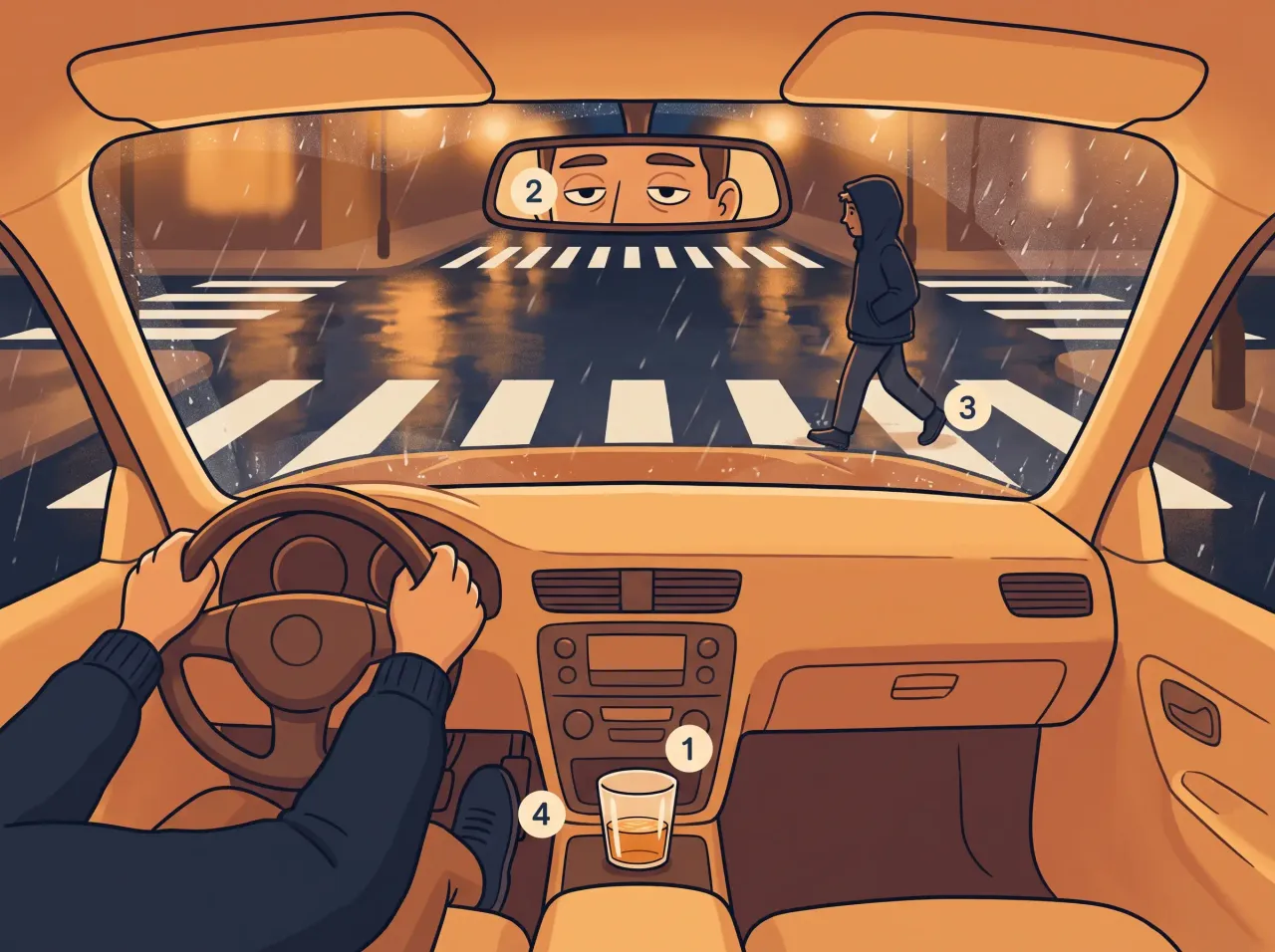
Alcohol slows the brain’s signals, so a driver may react late to a pedestrian or a red light. Even one drink can make the road ahead harder to judge.
In the picture
- A glass in the center console: an alcoholic drink that can slow reaction time.
- The driver’s left eye: a delayed, fixed gaze that misses quick changes.
- A pedestrian’s foot on a crosswalk stripe: a person stepping into the car’s path.
- The brake pedal under the hovering foot: a foot that has not yet pressed down.
Examples
- A driver waits a second too long before braking for a child on a bike.
- A driver fails to notice a pedestrian stepping off the curb at night.
Key takeaways
- Alcohol slows reflexes and concentration.
- Driving after drinking raises the chance of hitting someone.
Carry on in the app
Three questions on this lesson, to check the idea stuck. Free in the app while the lesson is in the free week.
At least one new illustrated lesson every weekday for your child’s year, with its quiz and a reminder at 6:15 pm.
Get the app
Free app, optional subscription
App Store Google Play