Mon Prof Augmenté
From City Centre to Countryside
Age 14 · Geography
Open to everyone until Wednesday, November 18
To keep it, print it while it is open.
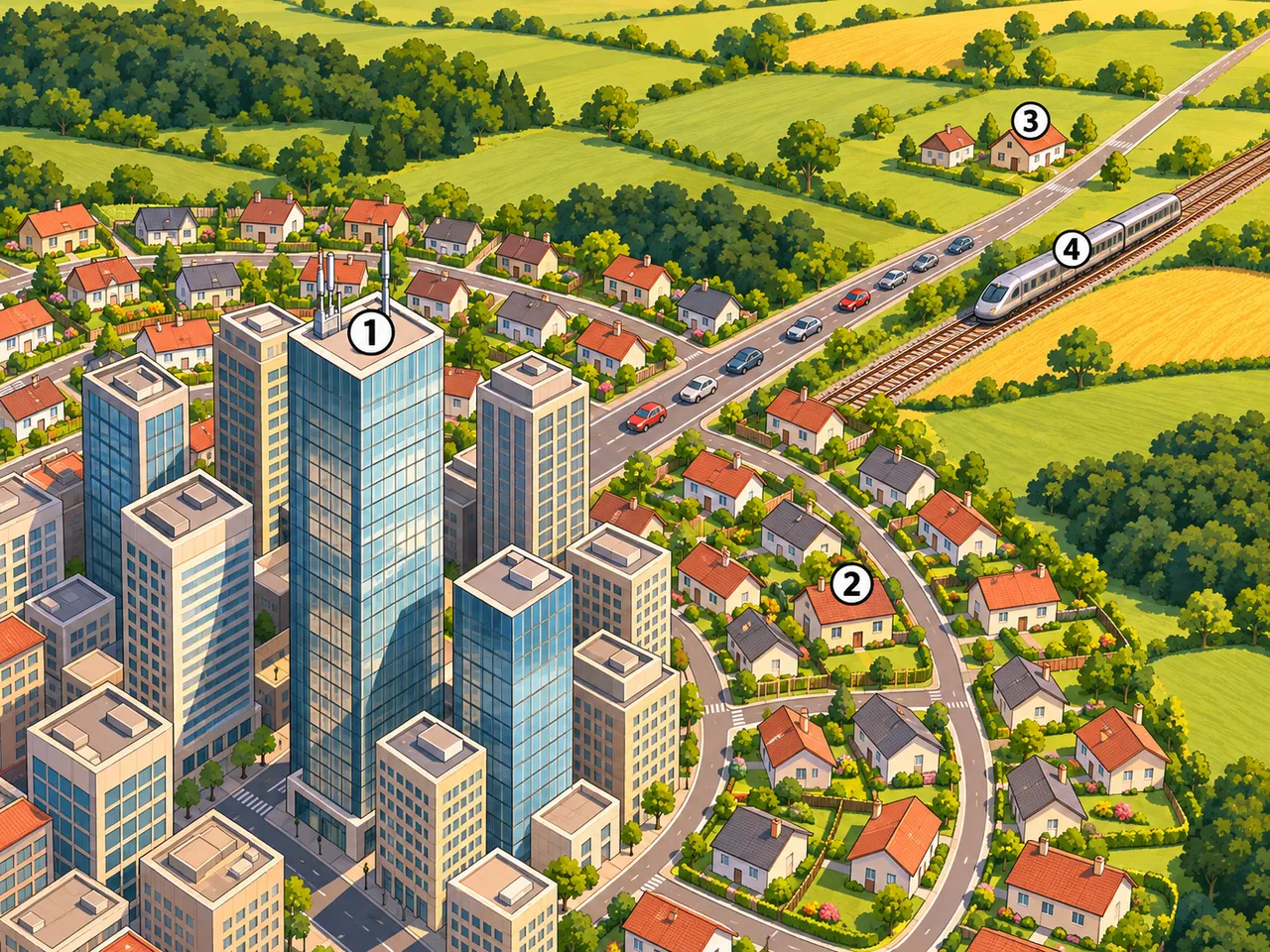
Cities spread outward from a dense centre of offices and flats, through suburbs of houses, to a fringe where homes are scattered among fields. Many people live on the edge and travel into the centre every day for work or school.
In the picture
- City centre: tall buildings packed closely, with offices, shops and flats
- Suburbs: rings of houses with gardens, mostly homes
- Peri-urban fringe: scattered houses spreading into fields and woods
- Commuter routes: roads and railways carrying people into the centre each day
Examples
- A family moves to a new housing estate at the edge of town and the parents drive to work in the city
- A student catches the morning train from a village to a school in the city centre
Key takeaways
- Building density falls from the city centre out to the countryside
- Urban sprawl spreads housing into farmland and depends on commuting by car and train
Quiz: From City Centre to Countryside (Age 14)
-
How does building density change as you travel from a city centre out to the countryside?
-
Which description best fits the peri-urban fringe of a city?
-
What does urban sprawl depend on to work?
The answers, each with its explanation, are in the app. This quiz is free there while the lesson is in the free week.
Get the app
Free app, optional subscription
App Store Google Play
Carry on in the app
At least one new illustrated lesson every weekday for your child’s year, with its quiz and a reminder at 6:15 pm.
Your child’s teacher does not use My Enhanced Teacher yet?
Tell them about it